
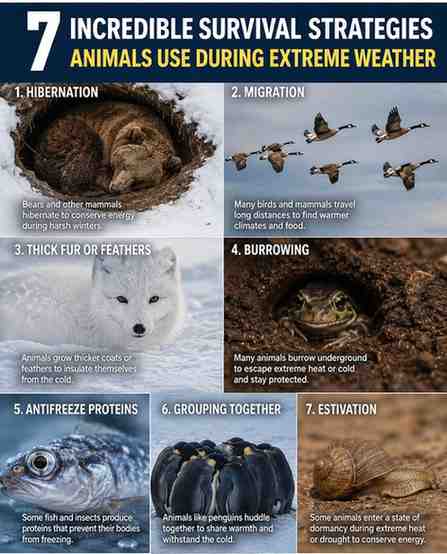
introduction
excessive weather is becoming greater commonplace the world over. powerful storms, excessive heatwaves, long droughts, freezing winters, and severe floods mission the Survival Strategies Animals of countless species every yr. whilst people rely on era, safe haven, and forecasting systems to address those conditions, animals rely on something even more top notch—their herbal Survival Strategies Animals techniques.
Over millions of years, flora and fauna has advanced super ways to conform to harsh environments. a few Survival Strategies Animals can gradual their bodies down almost to the factor of death. Others migrate hundreds of miles to break out risky situations. some species can even live to tell the tale being frozen stable for prolonged durations.
those notable adaptations spotlight the resilience of nature and display how animals keep to thrive notwithstanding some of the planet’s toughest climate situations. In this article, we explore seven charming survival strategies animals use throughout intense climate and what these behaviors teach us about model in a changing world.
Why excessive weather challenges Survival Strategies Animals
extreme climate impacts Survival Strategies Animals methods:
- decreased get entry to to food and water
- increased chance of dehydration
- publicity to risky temperatures
- Habitat destruction from storms and floods
- increased opposition for assets
to triumph over those challenges, animals have developed specialized behaviors and organic variations that improve their probabilities of Survival Strategies Animals.
let’s explore some of the maximum incredible examples.
1. Hibernation: napping through the Worst conditions
how it Works
Hibernation is one among nature’s only survival techniques. at some stage in lengthy durations of bloodless weather, sure animalsSurvival Strategies Animals dramatically lessen their metabolism, heart fee, and body temperature.
by using coming into a deep sleep-like country, they conserve electricity when food is scarce.
Animals That Hibernate
- Bears
- floor squirrels
- Hedgehogs
- Bats
- Dormice
actual-global example
ground squirrels can decrease their body temperature to near-freezing ranges throughout winter. Their coronary heart fee drops significantly, letting them continue to exist for months with out eating.
Why It allows
Hibernation allows Survival Strategies Animals to:
- keep electricity
- avoid meals shortages
- lessen publicity to dangerous climate
- live on long winters
with out this version, many species would conflict to undergo cold seasons.
2. Migration: Escaping extreme climate
the way it Works
as opposed to enduring risky conditions, a few Survival Strategies Animals actually leave.
Migration includes visiting long distances to attain regions with better temperatures, meals elements, and breeding conditions.
Animals recognized for Migration
- Monarch butterflies
- Arctic terns
- Wildebeest
- Humpback whales
- diverse fowl species
actual-global instance
The Arctic tern plays one of the longest migrations in the world, visiting among polar areas each 12 months. This adventure allows the fowl keep away from severe winters and maximize get right of entry to to meals.
Why It helps
Migration permits animals to:
- get away freezing temperatures
- keep away from drought conditions
- get entry to seasonal meals assets
- improve breeding achievement
even though migration calls for fantastic power, the blessings frequently outweigh the dangers.
three. Estivation: Surviving severe heat and Drought
what’s Estivation?
Estivation is just like hibernation but occurs throughout durations of intense heat or drought.
Survival Strategies Animals input a state of reduced interest and decrease metabolism till environmental conditions improve.
Survival Strategies Animals That Use Estivation
- African lungfish
- wasteland snails
- positive frogs
- Tortoises
- Salamanders
actual-international example
The African lungfish can survive months—or maybe years—buried in dried dust during severe droughts. It creates a protecting mucus cocoon and dramatically slows its physical features.
Why It enables
Estivation permits animals to:
- save you dehydration
- conserve strength
- live to tell the tale prolonged droughts
- watch for rainfall to return
This version is specially crucial in deserts and semi-arid areas.
4. developing Thick Insulation for Freezing Temperatures
Nature’s winter Coat
Many animals prepare for iciness by using growing thicker fur, feathers, or fat layers.
these herbal insulators help maintain body warmth even if temperatures drop some distance underneath freezing.
Animals With amazing Insulation
- Polar bears
- Arctic foxes
- Musk oxen
- Penguins
- Seals
real-world instance
The Arctic fox grows a dense iciness coat that is a few of the warmest determined in any mammal. Its fur covers almost each a part of its frame, which include the soles of its feet.
Why It enables
Insulation affords several blessings:
- Reduces warmth loss
- Protects towards icy winds
- Conserves strength
- supports survival throughout lengthy winters
Animals residing in polar regions rely heavily on this version.
5. building protective Shelters
Engineering for Survival
Many species create shelters mainly designed to face up to harsh weather.
those structures offer safety from wind, rain, warmth, cold, and predators.
shelter-constructing Animals
- Beavers
- Prairie puppies
- Rabbits
- Termites
- Meerkats
actual-global instance
Beavers assemble resorts using sticks, dust, and plants. these lodges can withstand freezing temperatures at the same time as supplying a secure, insulated dwelling area.
Termite mounds are similarly marvelous. a few hold solid internal temperatures regardless of severe heat outdoor.
Why It helps
shielding shelters help animals:
- modify temperature
- live dry during storms
- keep away from predators
- improve offspring accurately
those herbal engineering tasks demonstrate tremendous problem-fixing skills.
6. converting body Chemistry to resist Freezing
Nature’s Antifreeze machine
a few animals have evolved the ability to live on temperatures that would normally be fatal.
They produce special compounds that act like antifreeze, preventing ice crystals from damaging their cells.
Animals With Freeze Resistance
- timber frogs
- positive bugs
- Antarctic fish
- Arctic beetles
real-international example
wooden frogs are the various most superb examples. for the duration of winter, quantities of their our bodies freeze absolutely. Their hearts stop beating, and respiratory ceases.
while temperatures upward thrust, they thaw and resume ordinary pastime.
Why It allows
Freeze-resistant adaptations allow animals to:
- live on excessive bloodless
- keep away from migration
- continue to be of their habitats year-round
- lessen energy expenditure
This strategy demonstrates the excellent flexibility of biological structures.
7. Detecting weather modifications before They show up
Early caution structures in Nature
Many animals appear able to sensing environmental modifications earlier than human beings note them.
They reply to shifts in air strain, humidity, temperature, or even vibrations associated with coming near storms.
Animals recognized for climate Detection
- Birds
- Elephants
- Sharks
- Bees
- Toads
real-global instance
Researchers have discovered birds altering migration routes and feeding styles earlier than foremost storms arrive. in addition, a few elephant populations pass closer to higher floor earlier than heavy flooding occasions.
Why It enables
advanced climate sensing permits animals to:
- are trying to find safe haven early
- avoid risky areas
- protect offspring
- improve survival quotes
This natural forecasting potential can provide a important advantage at some point of excessive climate events.
How climate alternate Is checking out those Survival techniques
while those diversifications are amazing, cutting-edge weather trade is growing new challenges.
rapid environmental shifts are going on quicker than many species can adapt. traditional migration routes are changing, seasonal weather styles have become much less predictable, and habitats are disappearing.
Scientists have documented numerous rising troubles:
earlier Seasonal adjustments
some animals rely on environmental cues that no longer healthy food availability.
for instance:
- Birds can also arrive after top insect populations.
- Pollinators may emerge earlier than plants bloom.
more frequent Heatwaves
excessive heat locations additional pressure on species already residing close to their temperature limits.
Habitat Loss
Flooding, drought, wildfires, and storms can smash critical breeding and feeding grounds.
extended competition
As habitats cut back, animals might also compete extra intensely for resources.
know-how these demanding situations facilitates conservationists increase strategies to defend vulnerable natural world populations.
What humans Can learn From Animal variation
Animals demonstrate several treasured instructions about resilience:
Flexibility subjects
Species which can exchange conduct regularly adapt greater efficaciously to environmental challenges.
preparation Is critical
Many animals put together for intense weather lengthy before it arrives via migration, meals garage, or refuge creation.
electricity Conservation Improves Survival
techniques like hibernation and estivation display the significance of protecting sources at some stage in difficult times.
Cooperation allows
Many species live to tell the tale harsh conditions with the aid of dwelling and operating collectively.
Nature’s answers frequently encourage innovations in engineering, structure, and weather edition strategies for humans.
The future of flora and fauna in an technology of intense climate
Scientists retain studying animal diversifications to better recognize how species reply to converting climates.
New technologies which includes GPS tracking, satellite tv for pc tracking, and environmental sensors are revealing formerly unknown survival behaviors.
these discoveries no longer handiest deepen our appreciation for flora and fauna but also highlight the urgent want for conservation efforts.
protective habitats, lowering pollutants, and addressing climate exchange can assist make sure that destiny generations preserve to witness those high-quality survival strategies in action.
conclusion
From sound asleep via wintry weather and migrating throughout continents to surviving droughts and freezing temperatures, animals have developed superb ways to deal with extreme weather. these adaptations are the end result of millions of years of evolution and represent some of nature’s most brilliant achievements.
whether it’s a wooden frog freezing and thawing returned to lifestyles, a lungfish surviving years with out water, or a chook navigating thousands of miles to avoid harsh conditions, each instance demonstrates the excellent resilience of the natural global.
As extreme weather events emerge as extra frequent, understanding these survival strategies will become increasingly vital. They remind us that version is crucial for survival and that shielding wildlife is essential for preserving the balance of our planet’s ecosystems.
FAQ
1. what is the most commonplace animal survival method in the course of severe weather?
Hibernation is one of the maximum commonplace strategies. Many mammals lessen their pastime and conserve strength at some point of harsh wintry weather conditions.
2. How do animals live on extreme heat?
a few animals use estivation, are seeking for underground shelters, emerge as lively at night time, or reduce their metabolism to preserve water and electricity.
3. Can animals expect storms?
Many species can stumble on changes in air pressure, humidity, and environmental vibrations, supporting them respond before severe climate arrives.
4. Which animal can continue to exist being frozen?
wooden frogs are well-known for surviving partial freezing during wintry weather and returning to everyday hobby while temperatures rise.
5. How does climate alternate have an effect on animal survival strategies?
climate trade can disrupt migration patterns, food availability, breeding cycles, and habitats, making traditional survival techniques less effective for a few species.