
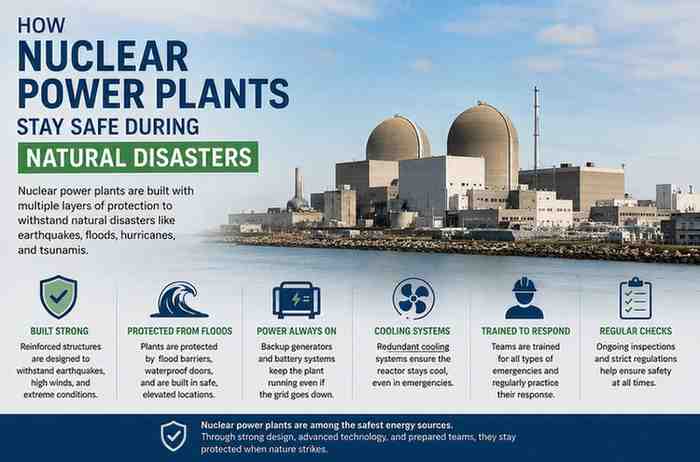
when humans reflect onconsideration on nuclear energy, one commonplace problem is what takes place if a herbal disaster moves. Earthquakes, tsunamis, hurricanes, floods, wildfires, or even severe warmness can damage buildings, disrupt electricity components, and threaten public safety. due to the fact nuclear plants take care of radioactive materials, many humans marvel whether these facilities can stay safe in the course of such occasions.
the quick solution is sure—modern-day nuclear power plants are designed with a couple of layers of protection specifically to face up to herbal failures. Engineers assume that unexpected events can take place, so they build structures that hold running even though several matters cross incorrect at the identical time.
during the last few decades, the nuclear industry has discovered essential training from real-world disasters and has reinforced safety standards around the arena. nowadays’s plant life use sturdy structures, backup power structures, emergency cooling equipment, and strict operating strategies to protect each workers and close by communities.
In this article, we’ll discover how nuclear power flora stay secure for the duration of herbal screw ups, what instructions were found out from beyond occasions, and why present day protection systems are a long way more potent than many human beings recognise.
Why herbal disaster safety matters
A nuclear reactor produces heat through managed nuclear fission. That heat is used to generate electricity. Even after a reactor is shut down, it maintains producing some residual heat for a period of time. this indicates cooling structures need to preserve operating to do away with that warmness safely.
natural screw ups can create challenges such as:
- lack of outside strength
- Flooding of equipment
- damage to roads and verbal exchange systems
- high winds and flying debris
- Wildfire smoke and heat
- Earthquakes that shake buildings and pipelines
To put together for these dangers, nuclear flora comply with a protection-in-depth approach, which means they rely on several unbiased safety barriers in preference to a single shielding degree.
The defense-in-depth safety approach
think about nuclear safety as a chain of defensive layers.
Layer 1: Prevention
flora are built to reduce the chance of injuries.
Layer 2: manage
Operators can appropriately shut down the reactor if situations become peculiar.
Layer 3: Cooling
multiple structures get rid of heat from the reactor.
Layer 4: Containment
strong containment systems hold radioactive substances remoted.
Layer 5: Emergency reaction
unique strategies and backup system help manipulate severe situations.
This layered technique is one of the important motives modern-day nuclear centers are considered many of the most closely blanketed business web sites within the international.
How plant life Are Designed for Earthquakes
In regions with seismic pastime, nuclear plant life are constructed to withstand powerful ground shaking.
Seismic Engineering capabilities
- bolstered concrete systems
- Deep foundations anchored into strong floor
- bendy piping structures
- surprise-soaking up supports
- automatic reactor shutdown systems
whilst sensors detect robust shaking, the reactor mechanically shuts down within seconds. manipulate rods are inserted into the reactor core to forestall the fission response.
Actual-global instance: Japan
Many japanese nuclear plants are designed for giant earthquakes. during fundamental seismic occasions, reactors have routinely close down as intended, demonstrating that the first line of defense can work efficaciously.
Protection towards Tsunamis and Floods
Flooding is a major challenge because water can damage electric equipment and backup generators.
Key Flood protection Measures
- Seawalls and flood boundaries
- multiplied protection device
- water resistant doors and seals
- Drainage systems
- included emergency energy materials
After reading past failures, many flora upgraded their flood defenses and relocated vital device to better elevations.
What Nuclear flora found out from Fukushima
The Fukushima Daiichi coincidence in 2011 became a turning point for nuclear safety global.
A large earthquake prompted an automated reactor shutdown. The reactors to start with replied as designed. but, the following tsunami flooded backup electricity systems, making it difficult to preserve cooling the reactors.
As a result, international locations around the sector introduced extra protection enhancements, inclusive of:
- better flood safety requirements
- extra backup turbines
- transportable emergency equipment
- improved coincidence control procedures
- more advantageous operator education
- stronger international protection evaluations
The industry’s reaction to Fukushima considerably accelerated resilience against intense natural disasters.
Backup electricity: The coronary heart of Emergency safety
one of the most important safety functions is redundant backup power.
A standard Nuclear Plant may additionally Have
- a couple of outside electricity connections
- numerous diesel turbines
- Battery structures
- transportable mills
- cell pumping equipment
even supposing the principle electricity grid fails, operators nonetheless have numerous ways to hold cooling systems walking.
How flowers manage Hurricanes and excessive Storms
In coastal areas, nuclear facilities are designed for effective storms.
Protecting Measures consist of
- Wind-resistant structures
- included control rooms
- Secured outside system
- Emergency verbal exchange structures
- On-site supplies for prolonged operations
Operators may also lessen power or shut down reactors before a major typhoon arrives.
Wildfire protection systems
As wildfires grow to be more not unusual in some areas, nuclear plant life have reinforced fire protection.
Wildfire protection Measures
- plant life control across the website
- fireplace-resistant materials
- devoted firefighting systems
- Smoke monitoring gadget
- Emergency response coordination with local government
Managing intense warmth and Drought
weather alternate has elevated problem approximately warmness waves and water shortages.
Nuclear vegetation prepare by way of:
- tracking water temperatures
- the use of cooling towers wherein suitable
- Adjusting strength output during extreme situations
- retaining reserve water components
- planning for lengthy-time period weather dangers
The position of Containment homes
The most visible protection characteristic of many nuclear plants is the containment constructing.
these structures are usually made of thick reinforced concrete and metal. they’re designed to:
- face up to severe weather
- withstand earthquakes
- comprise radioactive materials
- protect vital equipment
- provide an extra barrier throughout emergencies
Containment homes are one cause nuclear injuries are tremendously uncommon notwithstanding a long time of operation worldwide.
Continuous monitoring and protection testing
safety isn’t primarily based simplest on layout. plant life are constantly monitored and examined.
Everyday sports encompass
- Emergency drills
- equipment inspections
- Seismic opinions
- Flood risk exams
- Cybersecurity assessments
- Operator schooling sporting activities
Regulators additionally behavior independent inspections to confirm compliance with protection requirements.
Worldwide Nuclear safety requirements
companies including the
international Atomic power organisation
help countries proportion protection know-how and first-class practices.
many nations follow the world over identified tips for:
- Plant design
- Emergency making plans
- disaster preparedness
- Radiation safety
- safety subulture
This international cooperation enables improve nuclear protection worldwide.
Emergency making plans past the Plant
safety planning extends outside the power as properly.
Communities near Nuclear plant life frequently Have
- Emergency notification systems
- Evacuation plans
- shelter steering
- ordinary public data packages
- Coordination among plant operators and government agencies
those plans are practiced often so that authorities can respond fast if wanted.
How secure Are modern-day Nuclear strength vegetation?
No business interest is absolutely threat-free. but, modern-day nuclear vegetation are designed with incredible levels of protection.
in comparison with many other large power centers, nuclear flora normally have:
- huge regulatory oversight
- a couple of unbiased protection structures
- sturdy containment structures
- non-stop monitoring
- certain emergency planning
- everyday improvements primarily based on new scientific expertise
for this reason, many electricity experts don’t forget nuclear electricity one of the maximum cautiously engineered types of large-scale electricity technology.
The destiny: Even safer Reactor Designs
New reactor technologies aim to improve safety in addition.
Superior features might also consist of
- Passive cooling structures that work with out strength
- Smaller reactor designs
- Underground installations
- advanced gasoline technology
- Simplified emergency structures
those improvements are meant to reduce the want for operator intervention at some stage in extreme occasions.
Conclusion
herbal disasters may be effective and unpredictable, but cutting-edge nuclear electricity plant life are built with the expectation that such activities may arise. thru bolstered structures, computerized shutdown structures, backup power resources, flood safety, containment buildings, and complete emergency planning, nuclear centers use more than one layers of defense to shield human beings and the environment.
The classes discovered from past occasions—specifically the Fukushima coincidence—have led to foremost safety improvements round the sector. today’s nuclear plants are higher prepared for earthquakes, floods, hurricanes, wildfires, and other severe conditions than ever earlier than.
As international locations are trying to find reliable low-carbon power assets, understanding how nuclear energy flora live safe at some stage in natural screw ups is important. whilst no era is best, the nuclear enterprise maintains to reinforce its protection systems, making resilience and preparedness crucial to trendy nuclear electricity.
FAQ: Nuclear power Plant safety at some point of natural screw ups
1. Can a nuclear power plant live to tell the tale a prime earthquake?
sure. plant life in seismic regions are designed to withstand massive ground shaking and robotically shut down if strong vibrations are detected.
2. What happens if the electricity grid fails?
Nuclear plants have more than one backup strength structures, including diesel mills, batteries, and transportable system to hold cooling structures running.
3. Are nuclear plants blanketed from floods and tsunamis?
modern vegetation use flood obstacles, improved gadget, waterproof structures, and stepped forward emergency making plans to reduce flood-associated dangers.
4. Did Fukushima trade nuclear safety requirements?
yes. After Fukushima, many countries reinforced flood protection, delivered backup gadget, advanced emergency methods, and expanded protection critiques.
5. Are newer reactors more secure than older ones?
Many more recent reactor designs encompass passive safety capabilities that may offer cooling even without outside strength, making them greater resilient for the duration of emergencies.
Great content! Keep up the good work!