
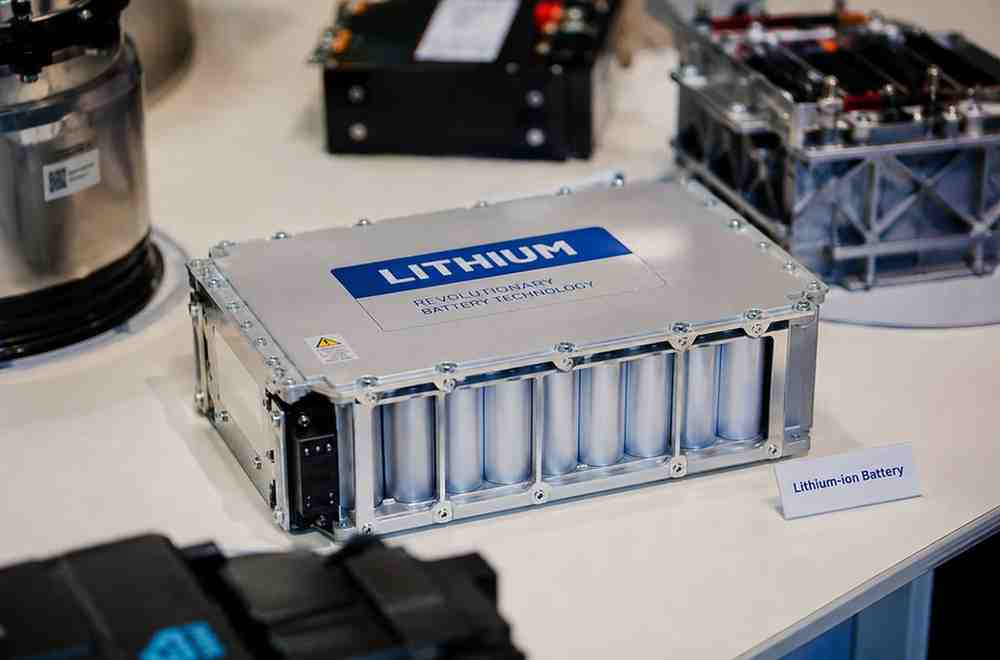
Introduction: The Battery That Changed the World Is Getting a Major Upgrade
In 1991, Sony introduced the first commercial lithium-ion battery. Almost overnight, it changed everything. Suddenly, laptops became portable, mobile phones became truly mobile, and the seeds of the electric vehicle revolution were quietly planted. For over three decades, lithium-ion technology has been the undisputed king of rechargeable energy storage.
But here’s the thing about kings — they either evolve or they get replaced.
Today, the global demand for better, safer, cheaper, and more powerful batteries has never been greater. Electric vehicles need to travel farther on a single charge. Renewable energy grids need to store solar and wind power reliably. Smartphones need to last days, not hours. Medical devices need batteries that are lighter and longer-lasting. Military and aerospace applications demand energy storage that performs in the most extreme conditions imaginable.
The pressure on battery technology is immense — and the scientific community has responded with an explosion of innovation. Researchers, engineers, and startups around the world are not simply tweaking lithium-ion batteries. They are fundamentally reimagining them — pushing the boundaries of chemistry, materials science, nanotechnology, and artificial intelligence to create batteries that would seem almost magical compared to what powers your phone today.
This is not a story about replacing lithium. It is a story about supercharging it — taking the core strengths of lithium chemistry and amplifying them with 10 of the most exciting innovations the battery world has ever seen.
Welcome to the future of lithium batteries.
Why Lithium Battery Innovation Matters More Than Ever
Before exploring the innovations, it helps to understand the stakes.
The global battery market was valued at approximately $108 billion in 2023 and is projected to exceed $400 billion by 2035. This explosive growth is driven by three converging forces:
- Electric vehicles: Every major automaker on Earth is racing to electrify its fleet. By 2030, hundreds of millions of EVs will need batteries that are cheaper, longer-lasting, and faster to charge than what exists today.
- Renewable energy: Solar and wind power are cheap and clean — but the sun doesn’t always shine and the wind doesn’t always blow. Storing renewable energy at grid scale is one of the defining engineering challenges of the 21st century.
- Consumer electronics and beyond: Smartphones, laptops, wearables, drones, medical implants, and satellites all depend on batteries. Making them smaller, lighter, and more powerful unlocks entirely new categories of technology.
The limitations of today’s lithium-ion batteries — limited energy density, degradation over time, slow charging, safety risks from liquid electrolytes, and dependence on scarce materials like cobalt — are not minor inconveniences. They are genuine barriers to the clean energy future the world urgently needs.
These 10 innovations are the answers the world has been waiting for.
10 Innovations Changing the Future of Lithium Batteries
1. Silicon Anodes — Supercharging Energy Storage by 40%
Inside every lithium-ion battery, the anode — the negative electrode — is almost always made of graphite. Graphite is reliable and stable, but it has a fundamental limitation: it can only store a relatively modest amount of lithium ions per unit of weight.
Silicon, by contrast, can store ten times more lithium ions than graphite by weight. In theory, replacing graphite with silicon in the anode could increase a battery’s energy density by up to 40% — meaning an electric vehicle could travel 40% farther on the same size battery pack, or the same range could be achieved with a 40% lighter, smaller battery.
The reason silicon hasn’t already replaced graphite is a well-known problem: silicon expands by up to 300% in volume when it absorbs lithium ions during charging, then contracts again during discharging. This repeated swelling and shrinking cracks the silicon particles, rapidly degrading the battery.
The breakthrough: Engineers have solved this problem through nanostructured silicon — engineering silicon at the atomic scale into nanowires, nanoparticles, or porous structures that can flex and absorb the volume changes without cracking. Companies like Sila Nanotechnologies (backed by BMW and Mercedes-Benz), Group14 Technologies (backed by Porsche), and Amprius (which supplies batteries to Airbus) have all achieved commercial silicon anode production.
Sila’s silicon anode technology is already in the Samsung Galaxy smartphones sold today — and the company has announced partnerships with major automakers for EV battery production by 2026.
Real-world impact: Expect silicon anode batteries to become standard in premium electric vehicles within 3–5 years, delivering longer range without increasing battery size or weight.
2. Lithium Metal Anodes — The Quantum Leap in Energy Density
If silicon anodes are a major upgrade, lithium metal anodes are a complete generational leap. Instead of storing lithium ions in a host material like graphite or silicon, a lithium metal anode is pure lithium — the most energy-dense anode material that lithium chemistry allows.
Using a lithium metal anode can theoretically increase energy density by 50–100% compared to graphite anodes. Combined with a high-performance cathode, lithium metal batteries could deliver energy densities approaching 500 watt-hours per kilogram — compared to the 250–300 Wh/kg of today’s best lithium-ion batteries. For electric vehicles, this means potentially doubling the range without increasing the battery’s weight.
The challenge: Lithium metal is extremely reactive. In conventional liquid electrolyte batteries, lithium metal anodes develop dangerous needle-like growths called dendrites during charging — which can pierce the battery’s separator, causing short circuits and fires. This problem has prevented lithium metal anodes from being used commercially for decades.
The solutions emerging now:
- Solid-state electrolytes (which we’ll explore in innovation #4) physically block dendrite growth
- Advanced liquid electrolyte additives that form a stable protective layer on the lithium surface
- 3D lithium metal architectures that guide lithium deposition in safe, controlled patterns
QuantumScape (backed by Volkswagen with over $300 million invested) and Solid Power (backed by BMW and Ford) are both developing lithium metal anodes paired with solid electrolytes. QuantumScape has published data showing their cells maintaining 95% capacity after 1,000 cycles — a performance level that would comfortably outlast the lifetime of an electric vehicle.
3. Lithium-Sulfur Chemistry — Five Times the Power at a Fraction of the Cost
Sulfur is one of the most abundant elements on Earth — a cheap byproduct of oil refining available in essentially limitless quantities. It is also, theoretically, one of the most powerful cathode materials for lithium batteries, offering an energy density up to five times greater than the metal oxide cathodes used in conventional lithium-ion batteries.
A lithium-sulfur (Li-S) battery pairs a sulfur cathode with a lithium metal anode to create a cell of extraordinary theoretical capacity — up to 2,600 watt-hours per kilogram, compared to the ~250 Wh/kg of today’s best lithium-ion cells. If even a fraction of this theoretical potential could be realized commercially, it would revolutionize electric aviation, long-haul trucking, and premium electric vehicles.
The key innovation overcoming past failures:
The main obstacle has always been the “polysulfide shuttle problem” — intermediate reaction products called polysulfides dissolve into the liquid electrolyte, slowly destroying the battery from within and causing rapid capacity fade. Early lithium-sulfur batteries barely survived 100 charge cycles.
Recent breakthroughs include:
- Nanostructured sulfur cathodes that contain polysulfides within a carbon matrix, preventing dissolution
- Specialized electrolyte formulations that are chemically incompatible with polysulfide dissolution
- Solid electrolytes that physically prevent polysulfide migration
In 2024, researchers at Monash University in Australia demonstrated a lithium-sulfur cell surviving 1,500 cycles with minimal degradation — a landmark achievement. Lyten, a US-based startup, has announced lithium-sulfur battery prototypes for electric vehicles with energy densities 40% higher than current lithium-ion batteries, with commercial production targeting 2026.
4. Solid-State Electrolytes — Making Lithium Batteries Truly Safe
Of all the innovations on this list, solid-state electrolytes may be the single most transformative — because they don’t just improve one metric. They simultaneously improve safety, energy density, lifespan, charging speed, and operating temperature range by replacing the flammable liquid electrolyte at the heart of conventional lithium-ion batteries.
Conventional lithium-ion batteries use a liquid organic electrolyte to carry lithium ions between electrodes. This liquid is flammable — it’s the reason lithium-ion battery fires are so dramatic and difficult to extinguish. It also limits the battery’s operating temperature range, restricts which electrode materials can be used, and degrades over time as it reacts with the electrodes.
Solid electrolytes — made from ceramics, glass, or solid polymers — solve all of these problems simultaneously:
- No fire risk: Solid electrolytes are non-flammable, eliminating the thermal runaway chain reaction that causes battery fires
- Wider temperature range: Solid electrolytes don’t freeze or evaporate, enabling operation in extreme cold and heat
- Enable lithium metal anodes: Solid electrolytes physically block dendrite growth, making the lithium metal anode (with its massive energy density advantage) safe and practical
- Longer lifespan: More chemically stable interfaces between solid electrolyte and electrodes mean slower degradation
Who is winning the solid-state race?
- Toyota has invested over $13.6 billion in solid-state battery development and announced commercial EV production using solid-state batteries by 2027–2028
- Samsung SDI has demonstrated solid-state cells with 900 Wh/L volumetric energy density — nearly double current lithium-ion
- CATL (world’s largest battery manufacturer) announced its first-generation solid-state batteries entering production in 2027
The manufacturing challenge — producing solid electrolyte layers thin enough and uniform enough at gigafactory scale — remains the primary obstacle. But the pace of progress has accelerated dramatically, and most analysts now consider commercial solid-state batteries in electric vehicles by 2028–2030 to be a near-certainty.
5. AI-Designed Battery Materials — Finding Tomorrow’s Chemistry Today
Discovering a new battery material the traditional way is painfully slow. A researcher proposes a hypothesis, synthesizes a new compound, tests it, analyzes the results, refines the hypothesis, and tries again. A single promising material can take 5–10 years to move from initial concept to validated prototype. With millions of possible chemical combinations to explore, the conventional approach leaves most of the solution space permanently unexplored.
Artificial intelligence is changing this entirely.
Machine learning models — trained on databases of known materials and their properties — can now screen millions of candidate materials in days, predicting their electrochemical performance, stability, and manufacturing feasibility before a single gram is synthesized in a laboratory. This compresses what once took a decade into months.
Real-world results are already emerging:
- Google DeepMind’s GNoME project (Graph Networks for Materials Exploration) discovered 2.2 million new crystal structures in 2023, including hundreds of potentially superior battery materials — more materials than humans had discovered in all of recorded scientific history
- Microsoft’s Azure Quantum platform used AI to identify a new solid electrolyte material in 80 hours that would have taken traditional methods an estimated 18 months
- Startup Aionics uses AI to optimize liquid electrolyte formulations, finding combinations that dramatically improve battery performance at a fraction of traditional development cost
The compounding effect: As AI discovers new materials faster, those materials enter testing sooner, generating new data that further trains the AI, accelerating the next round of discovery. This virtuous cycle is fundamentally changing the pace of battery innovation.
6. Self-Healing Battery Materials — Batteries That Repair Themselves
One of the primary reasons lithium-ion batteries degrade is physical damage at the microscopic level. As batteries charge and discharge, electrodes expand and contract, causing tiny cracks to form in electrode materials and at the interface between electrode and electrolyte. Over hundreds of cycles, this microscopic damage accumulates, reducing the battery’s capacity and eventually causing failure.
Self-healing materials — polymers and coatings that can autonomously repair microscopic damage — offer a radical solution to this fundamental problem.
How it works: Self-healing battery components incorporate materials with reversible chemical bonds — connections between molecules that can break under stress but reform spontaneously when the stress is removed, effectively “healing” microscopic cracks without any external intervention.
Breakthroughs achieved:
- Researchers at Stanford University developed a self-healing polymer coating for silicon anodes that allows silicon to swell and crack during charging, then autonomously repair — enabling silicon anodes to maintain >80% capacity after 500 cycles, compared to rapid degradation without the coating
- Scientists at UC Berkeley demonstrated a self-healing solid electrolyte that repairs microscopic cracks between charge cycles, potentially enabling solid-state batteries to survive the mechanical stresses of repeated use that currently limit their lifespan
- Toyota Research Institute has published research on self-healing cathode materials that spontaneously repair crystal structure damage, extending cathode lifespan dramatically
Real-world impact: Self-healing materials could extend battery lifespan from the current 500–1,000 cycles of lithium-ion batteries to potentially 5,000+ cycles — meaning an electric vehicle battery could outlast the vehicle itself.
7. Lithium-Air Batteries — Approaching the Energy Density of Gasoline
Here is a number that puts the ambition of lithium battery research in perspective: the theoretical energy density of a lithium-air battery is approximately 3,460 watt-hours per kilogram. For comparison, today’s best lithium-ion batteries achieve around 300 Wh/kg. Gasoline contains about 12,000 Wh/kg — but internal combustion engines are only about 25–30% efficient, making their effective energy delivery around 3,000 Wh/kg.
A lithium-air battery, at full theoretical potential, would match the effective energy delivery of gasoline in a lightweight, rechargeable, zero-emission package. It would be the battery that ends the era of fossil fuels.
How it works: A lithium-air battery uses lithium metal as the anode and oxygen from the surrounding air as the cathode reactant — meaning the cathode material doesn’t need to be stored inside the battery. This dramatically reduces weight and increases energy density.
The 2024 breakthrough: Researchers at Illinois Institute of Technology and Argonne National Laboratory published results demonstrating a lithium-air battery maintaining performance over 1,000 charge cycles — shattering previous records and addressing the most fundamental durability problem that has hindered this technology for decades.
Remaining challenges: Managing the reaction products, preventing moisture contamination from real air (as opposed to pure oxygen), and achieving adequate charging efficiency remain significant obstacles. Commercial viability is likely 15–20 years away — but the pace of progress is accelerating.
8. Ultra-Fast Charging Architecture — Full Charge in 10 Minutes
Even with perfect energy density, a battery that takes hours to charge will always be a barrier to electric vehicle adoption. Ultra-fast charging — achieving a meaningful charge in 10 minutes or less — requires innovations not just in batteries themselves but in the entire architecture of how batteries are designed, managed, and cooled.
The physics challenge: Fast charging means pushing large amounts of electrical current through a battery very quickly. This generates heat — which accelerates degradation — and can cause lithium to deposit unevenly on the anode, forming dendrites. Managing these effects requires innovations across multiple dimensions simultaneously.
Key innovations enabling ultra-fast charging:
- Cobalt-free LFP (lithium iron phosphate) batteries with nano-engineering: CATL’s Shenxing battery, launched in 2023, achieves 400 km of range in 10 minutes of charging using nanostructured LFP chemistry and advanced thermal management
- Sodium-ion hybrid architectures: Combining sodium-ion cells (which charge faster) with lithium-ion cells in a hybrid pack to handle peak charging power while lithium cells handle energy delivery
- Cell-to-pack thermal management: Revolutionary cooling systems integrated directly into battery cells — not just the pack — that remove heat fast enough to allow extreme charging rates without damage
- BYD’s Blade Battery with its flat, blade-shaped cells has inherently superior heat dissipation characteristics that enable faster charging than conventional cylindrical or pouch cells
StoreDot, an Israeli startup backed by Samsung, BP, and Daimler, has demonstrated EV battery cells that charge to 100% in under 10 minutes using silicon-dominant anodes. The company has announced manufacturing partnerships targeting commercial production by 2028.
9. Dry Electrode Manufacturing — Cutting Battery Costs by 30%
The innovations discussed so far have mostly focused on battery chemistry and materials. But one of the most impactful innovations in the near-term future of lithium batteries is a manufacturing process innovation: dry electrode technology.
Conventional lithium-ion battery electrodes are manufactured using a “wet” process: active materials are mixed with chemical solvents to form a slurry, coated onto metal foils, then dried in enormous, energy-intensive ovens. This process requires large factory footprints, consumes significant energy, uses toxic solvents that must be carefully managed, and is slow.
Dry electrode manufacturing eliminates the solvent entirely. Instead, electrode materials are processed in a completely dry state using a specialized binding and compression process. The result:
- 30–40% reduction in manufacturing cost by eliminating solvent processing, drying infrastructure, and solvent recovery systems
- Significantly smaller factory footprint — gigafactories can produce more batteries in less space
- Faster production — dry electrode lines can run significantly faster than wet processes
- Better performance — dry electrodes can be made thicker, increasing energy density
Tesla acquired Maxwell Technologies in 2019 specifically for its dry electrode technology and has been integrating it into its 4680 cylindrical cell production at Gigafactory Texas. Tesla has stated that dry electrode manufacturing is central to its goal of producing batteries at $60 per kilowatt-hour — below the price point at which electric vehicles become cheaper to manufacture than gasoline cars without subsidies.
10. Wireless Battery Management Systems (wBMS) — The Smart Battery Revolution
A battery is only as good as its management system. Every lithium-ion battery pack contains a Battery Management System (BMS) — electronics that monitor voltage, temperature, and state of charge across every cell, balance charging between cells, and protect the battery from overcharging, overdischarging, and overheating.
Conventional wired BMS technology uses physical wiring connecting sensors to a central controller — adding weight, complexity, potential failure points, and manufacturing cost. As battery packs become larger and more complex (some EV packs contain thousands of individual cells), wired BMS becomes increasingly cumbersome.
Wireless Battery Management Systems (wBMS), pioneered by Analog Devices and now adopted by General Motors in its Ultium battery platform, replace physical wiring with wireless communication between cell-level sensors and the central management system.
The benefits cascade:
- Weight reduction: Eliminating wiring harnesses reduces battery pack weight by up to 15%
- Manufacturing simplification: Wireless packs are dramatically easier and faster to assemble
- Flexibility: The same battery modules can be configured into different pack shapes without rewiring
- Better data: Wireless sensors can monitor conditions at the individual cell level more comprehensively than wired systems, enabling more sophisticated predictive maintenance and optimization
- Second-life enablement: Wireless packs can be quickly reconfigured for second-life applications in grid storage after their automotive life ends
AI integration with wBMS: The next frontier is integrating machine learning directly into wireless BMS — systems that learn each battery’s individual aging characteristics and continuously optimize charging and discharging to maximize lifespan. Early implementations are already showing 15–20% improvements in battery longevity through intelligent management alone.
The Combined Impact: What These 10 Innovations Mean Together
It is tempting to evaluate each of these innovations in isolation — a 40% energy density improvement here, a 30% cost reduction there. But the true power of this innovation wave comes from combining them.
Consider a near-future EV battery that incorporates:
- A silicon anode (+40% energy density)
- A solid-state electrolyte (safety + enables lithium metal)
- A lithium metal anode (+50–100% energy density)
- AI-optimized electrolyte chemistry (superior performance)
- Dry electrode manufacturing (-30% cost)
- Wireless BMS with AI management (+15-20% effective lifespan)
- Ultra-fast charging architecture (10-minute recharge)
The compounding effect of these improvements together doesn’t simply add — it multiplies. We are not looking at incremental improvement. We are looking at a generational transformation of what batteries can do and what they cost.
A Timeline of What’s Coming
| Innovation | Commercial Readiness | Key Players |
|---|---|---|
| Silicon Anodes | Now–2026 | Sila, Group14, Amprius |
| Ultra-Fast Charging | Now–2027 | CATL, BYD, StoreDot |
| Dry Electrode Manufacturing | Now–2027 | Tesla, Maxwell |
| Wireless BMS | Now | Analog Devices, GM |
| Solid-State Electrolytes | 2027–2030 | Toyota, QuantumScape, Samsung |
| Lithium Metal Anodes | 2027–2030 | Solid Power, QuantumScape |
| AI-Designed Materials | 2025–2030 | DeepMind, Microsoft, Aionics |
| Self-Healing Materials | 2028–2033 | Stanford, Toyota Research |
| Lithium-Sulfur | 2026–2032 | Lyten, Monash University |
| Lithium-Air | 2035–2040+ | Argonne Lab, MIT |
Conclusion: The Golden Age of Battery Technology Is Here
The story of lithium batteries is not ending — it is entering its most exciting chapter. The innovations described in this article are not science fiction. They are happening right now, in laboratories and gigafactories on every continent, backed by hundreds of billions of dollars in investment and driven by some of the sharpest minds in materials science, chemistry, and artificial intelligence.
Within this decade, electric vehicles will routinely offer 500-mile ranges, charge in 10 minutes, and cost less than gasoline cars. Within two decades, electric aircraft may connect cities, electric ships may cross oceans, and the last coal power plant may have closed — all made possible by the relentless innovation transforming the humble lithium battery.
The battery changed the world once already. It is about to do it again.