
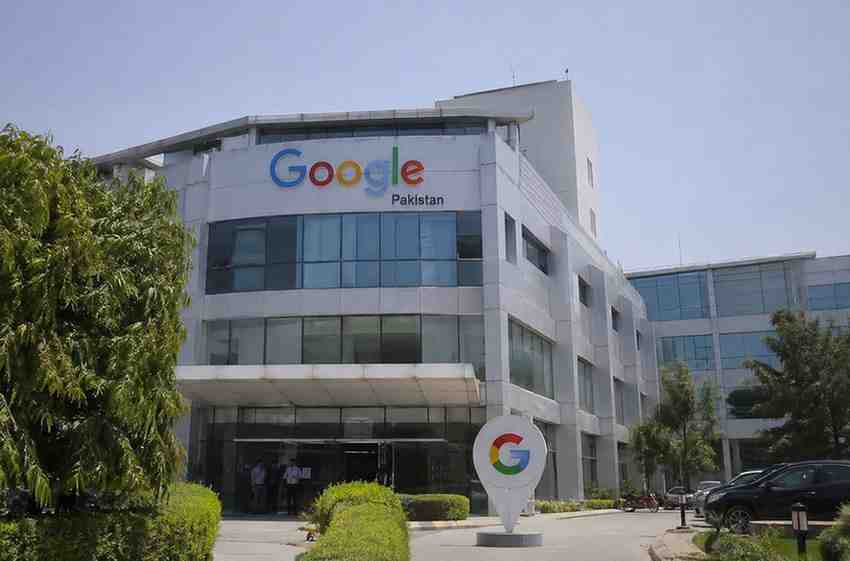
Introduction: A Decade in the Making — And It’s Just the Beginning
On August 18, 2026, something happened in Islamabad that Pakistan’s technology community had been waiting for — and working toward — for years. Prime Minister Shehbaz Sharif unveiled the foundation plaque of Google’s first official office in Pakistan, formally inaugurating a new chapter in the relationship between the world’s most powerful technology company and one of the world’s youngest and fastest-growing digital economies.
The ceremony was attended by a nine-member Google delegation led by Vice President for Government Affairs and Public Policy Wilson L. White, alongside U.S. Chargé d’Affaires Natalie Baker. The mood was celebratory — and the stakes were real.
This was not simply a ribbon-cutting. It was the formalization of a partnership that Google says has already been building for over a decade — one that, according to the company’s own figures, has generated Rs3.9 trillion in economic activity and supported more than 960,000 jobs across Pakistan. Now, with boots formally on the ground, both sides are signaling that the most ambitious phase of that partnership is only beginning.
For Pakistan — a nation of 240 million people, where 64% of the population is under 30, where IT exports are growing rapidly, and where the government has set a breathtakingly ambitious target of $30 billion in annual IT exports — Google’s arrival is more than a corporate milestone. It is a signal to the world: Pakistan is open for technology business.
For Pakistani students, freelancers, entrepreneurs, software developers, and job seekers, it raises intensely practical questions: What does this actually mean for me? What jobs will be created? What skills will be needed? What opportunities does this open — and how do I access them?
This article answers all of those questions — with up-to-date information on exactly what Google has committed, what is already happening on the ground, and what the road ahead looks like for Pakistan’s digital economy.
Part One: Understanding Google’s Decade of Investment in Pakistan
More Than a Decade of Quiet Commitment
When Wilson White stood before Prime Minister Shehbaz Sharif at the inauguration ceremony, he was careful to frame the office opening not as a beginning but as a milestone in a relationship that has been growing for years.
<cite index=”1-1″>”Google has been investing in and committed to Pakistan for over a decade,”</cite> White said, describing the office opening as an important — and long-awaited — milestone in that journey.
The numbers behind that decade of engagement are significant. <cite index=”5-1″>Google has contributed more than Rs3.9 trillion to economic activity involving Pakistani businesses and households over the past decade, while supporting more than 960,000 jobs.</cite>
To put that in perspective: Rs3.9 trillion is roughly equivalent to $14 billion USD at current exchange rates — a contribution to Pakistan’s economy that dwarfs most foreign direct investment the country has received in any comparable period. And the 960,000 jobs figure encompasses not just direct employment but the enormous ecosystem of businesses, developers, content creators, advertisers, and entrepreneurs whose livelihoods are built on Google platforms and services.
What Google’s Products Already Do for Pakistan
Before the office even opened, Google’s products were deeply embedded in Pakistan’s digital economy:
- Google Search and Maps are the primary navigation and information tools for hundreds of millions of Pakistani users
- YouTube is the dominant video platform, supporting a thriving ecosystem of Pakistani content creators who earn advertising revenue
- Google Play Store and Android power the overwhelming majority of smartphones in Pakistan, enabling the app economy
- Google for Education tools — Classroom, Workspace for Education, Meet — are used by schools and universities across the country
- Google Ads is the primary digital advertising platform for Pakistani businesses reaching both local and international customers
- Google Cloud services support Pakistani startups and enterprises with scalable computing infrastructure
<cite index=”1-1″>According to Google, its products and services generated Rs3.9 trillion in economic benefits in 2023, while its products supported 864,600 jobs through businesses and the Android app economy.</cite>
The local office formalizes and deepens this existing relationship — providing on-the-ground support, enabling direct partnerships with businesses and institutions, and positioning Pakistan as a priority market for future Google investments.
Part Two: The First Office — What It Means and What It Does
A Physical Presence Changes Everything
For years, Pakistani businesses, developers, and government institutions that wanted to work directly with Google faced a fundamental challenge: there was no one to call. Interactions happened through regional offices in Singapore, Dubai, or India — with all the friction and distance that implied.
The Islamabad office changes this dynamic entirely.
<cite index=”3-1″>Google’s Vice President Wilson White committed to furthering Pakistan’s goal of the $30 billion IT export ambition in three ways: by investing in the Pakistani people; by investing in manufacturing and the infrastructure around exports of hardware; and by investing in local businesses.</cite>
This three-pillar framework — people, manufacturing, businesses — is the clearest articulation of what Google’s Pakistani strategy actually looks like in practice. Each pillar has concrete programs and investments behind it.
Alignment With Pakistan’s National Digital Strategy
The timing of Google’s office opening is not coincidental. It aligns precisely with a series of major national policy initiatives that are reshaping Pakistan’s economic and technological landscape.
Pakistan’s Uraan Pakistan plan — formally titled the National Economic Transformation Plan 2024–29 — aims to double annual exports and establish Pakistan as a digital economy powerhouse. The government’s 2026–27 Annual Plan includes specific measures to improve conditions for IT exporters and freelancers, expand broadband infrastructure, and scale technology-focused training programs.
<cite index=”3-1″>The development comes as Pakistan accelerates efforts to expand its digital economy, with the government prioritizing technology-driven growth, digital infrastructure development, and a stronger role for the private sector in boosting exports.</cite>
Google’s arrival provides exactly the kind of marquee corporate validation that Pakistan’s government has been seeking to attract additional international technology investment. When Google opens an office, it sends a signal to every other technology company evaluating emerging markets: Pakistan is worth taking seriously.
Part Three: Jobs — What Opportunities Are Being Created
Direct Employment at the Haripur Chromebook Factory
The most immediate and tangible job creation from Google’s Pakistan expansion is happening not in Islamabad but in Haripur, Khyber Pakhtunkhwa — where Pakistan’s first Chromebook assembly line is already in operation.
<cite index=”33-1″>The Haripur assembly facility has already created 600 jobs in Pakistan, with strong participation from women engineers advancing Pakistan’s technology landscape.</cite> As production scales, the assembly line is expected to expand further — creating additional employment in manufacturing, quality control, logistics, and supply chain management.
<cite index=”38-1″>Google is expected to manufacture approximately 600,000 Chromebooks each year in Pakistan</cite> — a production volume that will require sustained workforce expansion at the Haripur facility and across its partner supply chain.
The Broader Job Ecosystem: 960,000 and Growing
The 960,000 jobs figure cited by Google is not just manufacturing jobs — it encompasses the full ecosystem of economic activity that Google’s presence enables:
App developers and software engineers — Pakistan has a large and rapidly growing community of software developers building apps for the Google Play Store and earning revenue from both local and international users.
Digital marketers and advertisers — Pakistani businesses using Google Ads to reach customers create demand for digital marketing professionals who understand Google’s advertising ecosystem.
Content creators and YouTubers — Pakistan’s YouTube creator economy has exploded in recent years, with thousands of creators earning advertising revenue from Google. A local office provides direct support and partnership opportunities for the most successful creators.
Google Career Certificate graduates entering the workforce — <cite index=”8-1″>Google has helped upskill 1 million Pakistanis through career certificates</cite>, many of whom have used those credentials to enter IT-related employment or grow existing businesses.
IT exporters and freelancers — Pakistan is one of the world’s top freelancing nations. <cite index=”12-1″>Pakistan’s IT sector has remained in trade surplus, while exports have continued to increase,</cite> driven significantly by freelancers and IT service companies whose work depends on Google platforms and tools.
What Jobs Will Google’s Office Create Directly?
The Islamabad office itself will create a smaller number of high-quality, direct Google employment positions — typically in areas such as:
- Sales and partnerships — working with Pakistani businesses on Google advertising, Cloud, and Workspace
- Government affairs and policy — managing Google’s relationship with Pakistani regulatory bodies and government institutions
- Developer relations — supporting the Pakistani developer community building on Google’s platforms
- Education partnerships — coordinating with schools, universities, and training institutions
- Communications and marketing — managing Google’s brand and communications in Pakistan
These positions will be in the hundreds rather than thousands — but they will be among the highest-quality, best-compensated technology sector jobs in the country, and they will create multiplier effects across Pakistan’s technology ecosystem.
Part Four: Technology — What Google Is Building in Pakistan
The Chromebook Manufacturing Revolution
The most dramatic technology development in Google’s Pakistan expansion is the Chromebook manufacturing initiative — a milestone that marks Pakistan’s transition from being purely a software-and-services technology economy to developing genuine hardware manufacturing capability.
<cite index=”21-1″>The new assembly line, based at the National Radio & Telecommunications Corporation NRTC’s Haripur facility, will produce up to 500,000 Chromebooks annually by 2026. These devices will be high-quality, secure, and affordable, and tailored specifically for educational and public sector use.</cite>
The partnership structure is a sophisticated public-private arrangement. <cite index=”27-1″>Google, in partnership with Tech Valley, Allied, and the National Radio & Telecommunication Corporation (NRTC), launched Pakistan’s first Chromebook assembly line at NRTC’s facility in Haripur.</cite> Allied is an Australian-based manufacturer; Tech Valley is a Pakistani private sector partner; NRTC is a defense production organization with extensive electronics manufacturing experience.
<cite index=”29-1″>Chromebook manufacturing in Haripur is expected to contribute up to PKR 2.8 trillion to Pakistan’s annual GDP by 2030. Beyond local demand, this initiative also opens doors for exports, helping Pakistan emerge as a regional hardware exporter.</cite>
The educational dimension of the Chromebook initiative is equally significant. Pakistan has a serious out-of-school children crisis — millions of Pakistani children lack access to quality education partly because of the cost barrier to digital tools. Locally assembled Chromebooks, produced at lower cost than imported devices, can make digital education accessible to a dramatically larger segment of Pakistan’s school-age population.
Artificial Intelligence — Google’s Biggest Commitment Yet
Perhaps the most forward-looking element of Google’s Pakistan expansion is its commitment to artificial intelligence — both providing AI tools to Pakistani users and training Pakistani professionals to build with AI.
<cite index=”13-1″>In a major initiative aimed at expanding access to emerging technologies, Google announced that it would provide free one-year subscriptions to Google Gemini to all students in Pakistan.</cite> This is an extraordinary commitment — giving every Pakistani student free access to one of the world’s most capable AI assistants for an entire year.
The practical implications are significant. Students who can use Gemini for research, writing, coding assistance, and learning acceleration will enter the job market with AI literacy that their predecessors lacked. In a world where AI skills are increasingly the baseline requirement for technology-sector employment, this initiative gives an entire generation of Pakistani students a crucial competitive advantage.
<cite index=”14-1″>Google’s AI Seekho Program has already trained 50,000 developers in Generative AI and Google Cloud tools</cite> — equipping Pakistani software developers with skills in the fastest-growing area of global technology employment.
<cite index=”11-1″>Artificial intelligence is becoming an important part of Google’s Pakistan strategy. Google has highlighted the potential for AI-powered technologies to improve productivity, education, business efficiency and employment opportunities in the country.</cite>
Google Cloud and Digital Infrastructure
Google’s expansion also strengthens Pakistan’s access to cloud computing infrastructure — a critical enabler for startups, enterprises, and government services that need scalable, reliable computing power without the capital investment of building physical data centers.
Improved local Google Cloud access means:
- Pakistani startups can build and scale globally competitive digital products without leaving the country
- Enterprise businesses can modernize their IT infrastructure using world-class cloud services
- Government digitalization — digital citizen services, e-governance platforms, and public sector databases — can be built on secure, scalable infrastructure
- AI and machine learning applications can be developed and deployed by Pakistani businesses without accessing distant international computing resources
Part Five: Skills and Education — Training a Digital Generation
Google Career Certificates — 350,000 Scholarships and Counting
One of Google’s most impactful programs in Pakistan is also one of its least-publicized. <cite index=”14-1″>Google Career Certificates have provided 350,000 scholarships since 2022, with over 80% of graduates landing a new job or growing their business within six months.</cite>
These certificates — in areas including IT support, data analytics, project management, UX design, cybersecurity, and digital marketing — are industry-recognized credentials that prepare Pakistanis for technology-sector employment without requiring a four-year university degree. They are designed to be completed in 3–6 months of part-time study, making them accessible to working adults, women with family responsibilities, and young people in areas without access to quality higher education.
An 80%+ employment outcome rate within six months is remarkable by any standard — and it reflects the genuine market demand for these skills in Pakistan’s rapidly growing technology sector.
One Million Pakistanis Upskilled
<cite index=”7-1″>Google said investment in people would remain central to supporting Pakistan’s digital transformation. The company has helped more than one million Pakistanis develop digital skills through its career certificate programmes and partnerships with schools and teachers. The programmes are aimed at preparing young people for a rapidly changing digital economy, where skills in areas such as artificial intelligence, cloud computing and other emerging technologies are increasingly important.</cite>
One million people trained is not a small number — it represents a meaningful transformation of Pakistan’s technology workforce. For context, Pakistan’s entire formal IT sector employment is estimated at approximately 300,000–500,000 people. Google’s training programs have already reached a population several times larger than the entire current IT workforce.
The AI Seekho Program — Building Pakistan’s AI Developer Community
<cite index=”14-1″>Google’s AI Seekho Program has already trained 50,000 developers in Generative AI and Google Cloud tools.</cite> This program specifically targets working software developers — people who already have programming skills and need to transition those skills to the AI-powered development paradigm that is rapidly replacing traditional software development approaches.
Generative AI skills — prompt engineering, fine-tuning language models, building AI-powered applications, working with the Google Cloud AI APIs — are among the highest-compensated technology skills in global markets right now. Pakistani developers who acquire these skills can command international freelancing rates and compete for remote positions with global technology companies.
Gaming and App Development — 120 Studios and Growing
<cite index=”14-1″>Google’s Think Apps and App Design Masterclasses have mentored 120 local app and gaming studios, helping them rack up millions of global downloads.</cite>
Pakistan’s mobile app and gaming sector is a sleeper opportunity in the country’s technology story. With a massive young population, high smartphone penetration, and significant gaming culture, Pakistan has genuine potential to develop a world-class app and gaming industry — one that generates export revenue from international app stores and advertising platforms.
Google’s direct mentorship of local studios provides exactly the market access, technical knowledge, and business guidance that Pakistani developers need to compete for global audiences.
Part Six: Business Opportunities — What This Means for Pakistani Entrepreneurs
The Signal to Global Investors
One of the less-discussed but critically important consequences of Google’s office opening is its signal value to the global investment community.
<cite index=”14-1″>Direct foreign direct investment confidence: Setting up a local office proves foreign investors see real long-term value in Pakistan’s tech scene. When Google sets up shop locally, it builds trust. It tells global investors that Pakistan is officially open for tech business.</cite>
When the world’s most sophisticated technology company — with more data about global market dynamics than any other organization — chooses to formalize its commitment to Pakistan by opening a physical office, it performs a due diligence function for every other company evaluating the market. If Google is in, Pakistan is worth looking at.
This multiplier effect could be as economically significant as Google’s direct investment. If Google’s presence catalyzes even a handful of additional major technology companies to establish Pakistani operations, the cumulative impact on jobs, skills, and exports could far exceed what Google delivers directly.
Opportunities for Pakistani Startups
Google’s local presence creates several specific opportunities for Pakistani technology startups:
Direct partnership access. With a local Google team in Islamabad, Pakistani startups can now seek direct partnerships, technical support, and business development assistance from Google — rather than competing for attention from regional offices serving dozens of countries.
Google for Startups programs. Google’s global startup programs — which provide cloud credits, mentorship, investor introductions, and market access support — become significantly more accessible to Pakistani companies when there is a local team managing these relationships.
Android app economy. Pakistan’s developer community has enormous untapped potential in the Android app economy. With local Google support, more Pakistani developers can successfully publish, monetize, and scale apps to regional and global markets.
Google Ads platform. Pakistani businesses with export ambitions can use Google’s advertising platform to reach international customers — and with local support, more Pakistani businesses can effectively leverage global digital marketing.
The Freelancing Economy — Pakistan’s Hidden Export Engine
Pakistan is consistently ranked among the top five countries globally for freelancing by platforms including Upwork, Fiverr, and Freelancer.com. Pakistan’s approximately 1.5–2 million active freelancers generate hundreds of millions of dollars in annual foreign exchange earnings.
Google’s expansion strengthens the freelancing economy in several ways:
- Better access to Google tools that freelancers use professionally — Workspace, Cloud, Firebase, various APIs
- Higher-value skill certifications through Google Career Certificates that enable freelancers to charge higher rates
- AI tools like Gemini that enhance freelancer productivity and enable them to take on more complex, higher-value work
- YouTube monetization — Pakistan’s content creators can benefit from improved local support for the YouTube Partner Program
<cite index=”18-1″>Pakistan also needs to use Google’s arrival as a signal to other global technology companies. More international firms should be encouraged to establish offices, development centres and research operations in the country. Their investment could create jobs, improve skills and connect Pakistani talent with global markets.</cite>
The $30 Billion IT Export Target — Is It Achievable?
The Pakistani government’s target of $30 billion in annual IT exports is ambitious — current IT exports are estimated at $3–4 billion annually, meaning the target requires roughly a 7–10x increase. Skeptics have questioned whether this target is realistic.
Google’s commitment suggests that at least one major technology company believes significant growth is achievable. Wilson White specifically framed Google’s three-pillar strategy — people, manufacturing, businesses — as directly contributing to the $30 billion goal.
<cite index=”30-1″>Experts project that expanding mobile apps, digital services, and cross-border e-commerce could add an estimated USD 6.6 billion in export value by 2030.</cite> If Chromebook exports, AI-enabled service exports, and expanded software development combine with the digital skills investments, the $30 billion target — while challenging — becomes more credible.
Part Seven: Challenges and What Pakistan Must Do Next
The Payment Infrastructure Problem
The most frequently cited practical obstacle to Pakistan’s IT export ambitions is the absence of international digital payment infrastructure. PayPal does not operate in Pakistan — a significant barrier for freelancers and small businesses trying to receive payments from international clients.
<cite index=”18-1″>The long-awaited arrival of PayPal or a comparable international digital payment platform would be particularly important for freelancers, software developers and small online businesses.</cite>
Google’s local presence may accelerate conversations about payment infrastructure — Google Pay and related Google payment products could potentially provide alternative pathways, and Google’s advocacy with the Pakistani government on regulatory issues affecting its business could indirectly benefit payment infrastructure more broadly.
Connectivity and the Digital Divide
Pakistan’s broadband infrastructure, while improving, remains uneven. Urban centers — particularly Karachi, Lahore, and Islamabad — have relatively good connectivity. Rural areas and smaller cities lag significantly.
The Chromebook initiative specifically addresses this by providing affordable, cloud-optimized devices to the education sector — but affordable devices are only useful with affordable, reliable connectivity. Pakistan’s government has included broadband expansion in its national plans, and Google’s advocacy for connectivity infrastructure improvements adds weight to these efforts.
Regulatory Environment
Pakistan’s technology sector has historically been burdened by complex regulatory requirements, uncertain policy environments, and occasional internet restrictions that create uncertainty for technology businesses.
Google’s formal registration and office opening — a major commitment that required navigating Pakistan’s regulatory environment — suggests that the company believes the current regulatory climate is workable. But continued improvement in ease of doing business, intellectual property protection, and technology sector-specific regulation will be essential to attract additional international technology investment.
Education System Alignment
Google’s training programs are impressive in scale, but they operate alongside — and sometimes in tension with — Pakistan’s formal education system, which has been slow to incorporate digital skills training at scale.
For Google’s investments in human capital to achieve their full potential, Pakistan’s universities, colleges, and school system need to accelerate the integration of technology education, AI literacy, and digital skills into their core curricula. The free Gemini subscriptions for students are a powerful tool — but only if teachers and institutions know how to integrate AI tools productively into learning.
Part Eight: What This Means for You — Practical Steps for Pakistanis
For Students
If you are a Pakistani student, the most immediate opportunity created by Google’s expansion is the free Google Gemini subscription announced at the inauguration ceremony. <cite index=”8-1″>White announced that Google Gemini will be made available free of charge to Pakistani students for one year.</cite>
Use this subscription actively — learn how to use AI for research, writing, coding, and problem-solving. AI literacy is rapidly becoming the most valuable technology skill in the global job market, and starting to build this skill set now puts you ahead of most of your peers.
Additionally, explore Google Career Certificates — particularly in high-demand areas like data analytics, cybersecurity, and digital marketing — as a path to employment that is faster and more market-aligned than many traditional degree programs.
For Software Developers
If you are a Pakistani software developer, the AI Seekho Program is the most important opportunity to explore immediately. <cite index=”14-1″>The AI Seekho Program has already trained 50,000 developers in Generative AI and Google Cloud tools</cite> — and this is exactly the skill set commanding the highest premiums in global technology markets right now.
Explore Google Cloud certifications — these internationally recognized credentials can significantly increase your earning potential both as a freelancer and in employment. The local Google office means that Cloud partnerships, credits for startups, and developer support programs become more accessible.
For Entrepreneurs and Startups
If you are running or planning a Pakistani technology startup, Google’s local presence creates new opportunities for Google for Startups programs, Google Ads support, and Google Cloud partnerships. The local team can be a direct point of contact for business development conversations that were previously difficult to access.
The Chromebook manufacturing initiative also signals that Pakistan is developing hardware manufacturing capacity — creating opportunities in the supply chain, logistics, and component distribution ecosystem that will support this growing industry.
For Businesses Seeking Digital Growth
Pakistani businesses across all sectors can benefit from Google’s local presence through improved access to Google Ads support, Google Workspace for business productivity, and Google Cloud for digital transformation. Local account management means better service, faster issue resolution, and more tailored guidance on using Google’s platforms for business growth.
Conclusion: A Turning Point, Not a Destination
When Prime Minister Shehbaz Sharif stood beside Wilson White to unveil the foundation plaque of Google’s Islamabad office, he called it “a milestone in Pakistan’s digital transformation journey” and “a stepping stone to a long journey.”
Both characterizations are accurate — and it is important to hold both simultaneously.
It is a milestone. <cite index=”3-1″>Google opening its first local office in Pakistan marks a significant expansion of the technology giant’s presence as Islamabad seeks to transform the country into a $30 billion annual IT export hub.</cite> The Rs3.9 trillion in economic activity, the 960,000 jobs supported, the one million Pakistanis trained, the Chromebook factory in Haripur, the free Gemini subscriptions for students — these are real, tangible, and significant.
But it is also a stepping stone. <cite index=”20-1″>For Pakistan, the challenge will now be converting this growing technology ecosystem into sustainable exports, higher-skilled employment and greater foreign investment. The Google office therefore represents more than a corporate expansion.</cite>
The work ahead — improving payment infrastructure, expanding connectivity, modernizing education, streamlining regulation, building world-class startups, and developing genuinely competitive technology exports — is vast. Google’s presence makes all of it easier, but none of it automatic.
Pakistan has what it needs: an extraordinarily large, extraordinarily young population with genuine hunger for education and opportunity. A growing technology sector with demonstrated capability in software development, freelancing, and digital services. A government that has committed — at the highest levels, with real policy backing — to making the digital economy a national priority.
And now, for the first time, a Google office in Islamabad.
What happens next depends on what Pakistan does with this moment.