
Introduction: The Man Who Bent the Arc of History
There are lives that are lived — and then there are lives that become legends while the person is still breathing.
Nelson Rolihlahla Mandela belongs to the second category. In a century that produced extraordinary leaders, revolutionaries, and moral figures, Mandela stood apart — not because he was born into greatness, but because he chose it, again and again, under circumstances that would have broken almost anyone else.
He was a shepherd boy in a rural South African village who became a lawyer, a revolutionary, a prisoner, and finally a president. He spent 27 years behind bars — nearly three full decades of his life locked away by a government that feared what he represented. He emerged from prison not bitter, not broken, but with a clarity of purpose and a depth of forgiveness that astonished the world.
He did not just lead a country. He modeled a way of being human — showing that it is possible to endure injustice without being consumed by hatred, to fight for freedom without losing one’s soul, and to lead a nation toward reconciliation rather than revenge.
This biography traces 15 of the most powerful moments that shaped Nelson Mandela’s extraordinary life — the turning points, the trials, the triumphs, and the quiet personal choices that, together, built one of the most remarkable human beings of the 20th century.
Early Life: The Making of a Leader
Moment 1: Born Into Royalty — And Poverty (July 18, 1918)
Nelson Rolihlahla Mandela was born on July 18, 1918, in the small village of Mvezo, on the banks of the Mbashe River in the Eastern Cape region of South Africa. His clan name, Rolihlahla, means “pulling the branch of a tree” — a colloquial expression in Xhosa for “troublemaker.” His English name, Nelson, was given to him by his first schoolteacher, as was the custom of the time.
His father, Gadla Henry Mphakanyiswa, was a chief of the Thembu people — a position of significant local authority and prestige. His mother, Nosekeni Fanny, was the third of his father’s four wives, and Nelson was the youngest of four children in her household.
When Mandela was just 12 years old, his father died — a loss that shook his world and changed its direction entirely. After his father’s death, the regent of the Thembu people, Chief Jongintaba Dalindyebo, became Mandela’s legal guardian and took him to live at the Great Place, the royal household at Mqhekezweni.
Growing up at the Great Place exposed young Mandela to something that would shape his entire approach to leadership: the tribal councils of the Thembu people, where elders and community members gathered to discuss issues affecting the community. Anyone could speak. The chief would listen to all views before expressing his own. Decisions were made by consensus.
Decades later, when Mandela described his leadership philosophy — listening before speaking, seeking consensus, respecting every voice in the room — he was describing something he had watched as a boy in a rural African village.
The lesson of this moment: Leadership is not inherited. It is learned — sometimes in the most unexpected classrooms.
Moment 2: The Education That Opened His World (1934–1943)
Education was not simply a path to opportunity for Nelson Mandela — it was a transformation. Mandela was one of the first members of his family to attend school, and he pursued learning with an intensity that would define his life.
He attended Clarkebury Boarding Institute, then Healdtown — one of the finest mission schools in sub-Saharan Africa — and finally enrolled at the University of Fort Hare in 1939, the only residential university for Black South Africans at the time and a breeding ground for much of Africa’s future leadership. His classmates included Oliver Tambo, who would become his lifelong friend, partner in law, and co-leader of the anti-apartheid movement.
At Fort Hare, Mandela was elected to the Student Representative Council — and then resigned from it in solidarity with a student protest over poor food quality. This act of principled defiance — sacrificing personal advancement for collective principle — got him suspended from the university.
Fleeing an arranged marriage organized by his guardian, Mandela arrived in Johannesburg in 1941 — and the city electrified him. He enrolled in law school at the University of the Witwatersrand, one of the few institutions that admitted Black students, and began his legal studies while working as a clerk at a white law firm.
It was in Johannesburg — in the law firm, in the university, in the vibrant, diverse, electric chaos of the city — that Mandela encountered ideas, people, and injustices that would shape everything that came next.
The lesson of this moment: Education does not merely prepare you for the world — sometimes it shows you what is wrong with it.
Moment 3: Joining the ANC and Choosing His Fight (1944)
In 1944, at age 26, Nelson Mandela joined the African National Congress (ANC) — the political organization founded in 1912 to represent the rights of Black South Africans. This decision was not casual. It was a commitment that would consume the rest of his life.
That same year, Mandela, Oliver Tambo, and Walter Sisulu — who would become Mandela’s closest political ally and confidant — co-founded the ANC Youth League, a more militant wing that pushed the ANC away from polite petitioning and toward mass action, strikes, and civil disobedience.
Also in 1944, Mandela married Evelyn Ntoko Mase, a nurse and cousin of Walter Sisulu. They would have four children together before divorcing in 1957 — a marriage strained, Evelyn would later say, by Mandela’s total devotion to politics over family.
The ANC Youth League’s Programme of Action, adopted in 1949, transformed the organization’s strategy and marked a decisive break from the cautious, petitioning approach of the older generation. It was Mandela, Tambo, and Sisulu who drove this transformation — young, educated, impatient, and angry.
The lesson of this moment: Choosing your fight — really choosing it, with full awareness of the cost — is the beginning of a purposeful life.
Moment 4: The Defiance Campaign and First Arrest (1952)
In 1952, the ANC launched the Defiance Campaign — a coordinated, non-violent campaign of civil disobedience against apartheid laws that had been systematically tightening since the National Party came to power in 1948. Volunteers across South Africa deliberately violated unjust laws — entering whites-only areas, using whites-only facilities, ignoring curfews — and invited arrest.
Mandela served as the Volunteer-in-Chief of the campaign, traveling the country to recruit and train volunteers. It was the largest organized resistance campaign South Africa had seen — approximately 8,500 people were arrested over six months.
Mandela himself was arrested and charged under the Suppression of Communism Act — his first arrest, though far from his last. He received a suspended sentence.
The Defiance Campaign did not end apartheid. The government responded with harsher legislation. But it accomplished something equally important: it transformed the ANC from an elite organization of educated professionals into a mass movement with tens of thousands of active members. It also made Nelson Mandela a nationally known figure for the first time.
He was banned from attending gatherings and confined to Johannesburg — the first of many restrictions the government would place on his movements in the years ahead.
The lesson of this moment: Even when a campaign doesn’t win immediately, it can build something essential — a movement, a momentum, a people who know their own power.
Moment 5: The Freedom Charter and the Treason Trial (1955–1961)
In June 1955, the ANC convened the Congress of the People at Kliptown, near Johannesburg — a gathering of approximately 3,000 delegates from across South Africa’s racial communities. Together, they adopted the Freedom Charter: a visionary document declaring that “South Africa belongs to all who live in it, black and white” and laying out a blueprint for a non-racial democratic society.
The Freedom Charter was a radical document for its time — and the apartheid government treated it as such. In December 1956, 156 anti-apartheid leaders — including Mandela — were arrested and charged with high treason. The accusation: that they were part of a communist conspiracy to violently overthrow the government.
The Treason Trial dragged on for five years, finally concluding in March 1961 with the acquittal of all defendants. The prosecution could not prove that the ANC’s campaign was violent or communist in intent.
During those five years of trial, Mandela continued organizing, continued studying law, and continued building the resistance movement. He also married Winnie Madikizela in 1958 — a social worker who would herself become one of the most powerful and controversial figures in the anti-apartheid struggle — and with whom he would have two daughters.
The lesson of this moment: When a government puts justice on trial, it reveals the illegitimacy of its own authority.
The Fire Years: From Activist to Revolutionary
Moment 6: Going Underground and the Birth of Umkhonto we Sizwe (1961)
The Sharpeville Massacre of March 21, 1960 — in which South African police opened fire on a crowd of peaceful Black protesters, killing 69 people and wounding 180 — was a turning point not just for the anti-apartheid movement but for Nelson Mandela personally.
After Sharpeville, the government banned the ANC entirely. Peaceful protest had been met with bullets. The question that confronted Mandela and his colleagues was brutal in its simplicity: what do you do when a government responds to nonviolent resistance with lethal violence?
Mandela’s answer — reached after deep reflection and intense debate within the ANC — was to form a military wing. In 1961, he co-founded Umkhonto we Sizwe (MK) — meaning “Spear of the Nation” — and became its commander-in-chief.
Critically, MK’s initial strategy was sabotage of economic and symbolic targets — power lines, government buildings, infrastructure — while explicitly avoiding the targeting of human beings. Mandela had not abandoned his moral principles; he had concluded that the situation demanded a different form of pressure.
To organize the movement, Mandela went underground — moving secretly across South Africa, sometimes in disguise, living in safe houses, appearing and disappearing like a ghost. He became known as the “Black Pimpernel” — a reference to the Scarlet Pimpernel, a fictional character who repeatedly evaded capture.
He traveled illegally to Algeria and Ethiopia for military training, and met leaders of African independence movements across the continent. He returned to South Africa in July 1962 — and was arrested within days.
The lesson of this moment: There comes a moment in every struggle when the old tools no longer serve — and a leader must choose new ones without losing sight of what they are fighting for.
Moment 7: The Rivonia Trial — “I Am Prepared to Die” (1963–1964)
In July 1963, South African police raided a farm in Rivonia, outside Johannesburg, that had been serving as the secret headquarters of MK. They seized documents, plans, and evidence linking the ANC’s military wing to sabotage operations across the country. Several of Mandela’s closest colleagues were arrested.
Mandela — already in prison serving a sentence for incitement and leaving the country illegally — was brought from prison to stand trial alongside them. The charges: sabotage and conspiracy to overthrow the government. The potential sentence: death.
The Rivonia Trial began in October 1963 and gripped South Africa and the world. International pressure for clemency mounted. The defendants knew that what they said in court would be heard far beyond the courtroom.
On April 20, 1964, Nelson Mandela delivered his statement from the dock. Speaking for nearly four hours, he laid out — with extraordinary clarity, passion, and dignity — the history of the ANC, the reasons for the turn to sabotage, and the vision of a free, non-racial South Africa.
He concluded with words that would echo through history:
“I have fought against white domination, and I have fought against Black domination. I have cherished the ideal of a democratic and free society in which all persons will live together in harmony and with equal opportunities. It is an ideal which I hope to live for and to achieve. But if needs be, it is an ideal for which I am prepared to die.”
On June 12, 1964, Mandela and seven co-defendants were sentenced to life imprisonment. The death penalty had been avoided — but only barely.
The lesson of this moment: The way a person faces their greatest trial reveals the full measure of their character.
The Long Imprisonment: 27 Years Behind Bars
Moment 8: Robben Island — The Prison That Could Not Break Him (1964–1982)
On the night of June 12, 1964, Nelson Mandela was flown to Robben Island — a maximum-security prison on a cold, windswept island in Table Bay, just off the coast of Cape Town. He would spend the next 18 years there.
The conditions were deliberately harsh. Mandela was classified as the lowest prisoner category — Category D — meaning the fewest privileges, the smallest rations, the most restricted access to reading materials and visitors. He was forced to perform hard labor in a lime quarry, breaking rocks in the blazing sun. The lime dust permanently damaged his eyes.
Prisoners were allowed one visitor every six months — a 30-minute visit, through a glass partition, supervised by guards. Letters were limited, heavily censored, and often withheld entirely. For two years after his imprisonment, Mandela was allowed no visitors at all.
Yet Robben Island did not break him. What happened instead was remarkable: Robben Island became a university. Mandela and his fellow prisoners organized secret study groups, debated politics and philosophy, shared books, and educated each other. They called it the “University of Robben Island.”
Mandela’s leadership did not stop at the prison gate. He negotiated with prison authorities for better conditions, maintained the dignity and discipline of his fellow prisoners, and continued to think, plan, and grow — quietly, relentlessly, over years that became decades.
He was also, in these years, becoming something he could not have planned: a symbol. Outside the prison walls, around the world, the campaign to free Nelson Mandela was becoming one of the most powerful human rights movements in history. Concerts were held. Sanctions were imposed. His name became shorthand for the struggle against apartheid.
Inside, he broke rocks and read books and waited.
The lesson of this moment: Prison can confine a body. It cannot confine a mind or a spirit — unless the prisoner allows it.
Moment 9: The Letter He Never Sent — Family and Sacrifice
Perhaps the least-told dimension of Mandela’s imprisonment is its personal cost — the price paid not in politics or principle but in love, family, and the irreplaceable currency of time.
While Mandela was imprisoned on Robben Island, his mother Nosekeni Fanny died in 1968. His eldest son Thembi was killed in a car accident in 1969. Mandela was not allowed to attend either funeral.
In letters to Winnie — many of which were censored or confiscated — Mandela wrote with heartbreaking tenderness about the distance between them, his longing for his children, and his grief at the years being stripped from his family life. In one letter, he described the prison cell as a place where a man is “reduced to a ghost” — present in spirit, absent in body, unable to perform the most basic human duties of a husband and father.
Winnie Mandela was herself subjected to relentless persecution by the apartheid government during these years — banning orders, house arrests, imprisonment, and forced relocation. She endured it with extraordinary courage, though the years of isolation and pressure took their own tragic toll.
In 1985, the South African government offered Mandela conditional release — if he would publicly renounce violence as a political instrument. His daughter Zindzi read his response at a rally in Soweto:
“I am not able to and will not give any undertaking at a time when I and you, the people, are not free. Your freedom and mine cannot be separated.”
He chose to remain in prison rather than compromise the movement.
The lesson of this moment: True sacrifice is not made in a single dramatic moment. It is made again and again, in the small, private, unbearable losses that history rarely records.
Moment 10: Secret Negotiations Begin — Talking to the Enemy (1985–1989)
By the mid-1980s, South Africa was burning. The townships were in open revolt. International sanctions were crippling the economy. The apartheid government, under President P.W. Botha, was facing a crisis it could no longer manage by force alone.
In this atmosphere, something extraordinary and secret began: Nelson Mandela initiated talks with the apartheid government — not at the government’s request, but on his own initiative, without the knowledge of his ANC colleagues outside prison.
This was an act of extraordinary political courage and equally extraordinary risk. Many in the ANC and the broader liberation movement viewed any negotiation with the apartheid regime as betrayal. The standing position was: no talks until all political prisoners are freed and the ANC is unbanned.
Mandela’s view was different. He believed that the moment for negotiation had arrived — that the government was sufficiently weakened and the movement sufficiently strong that a negotiated transition was possible and preferable to the alternative of prolonged, devastating conflict. He also believed — correctly, as it turned out — that he had unique authority to open a channel that no one else could.
He met secretly with government ministers, then with Botha himself. He was moved from Robben Island to Pollsmoor Prison in 1982 and later to Victor Verster Prison in 1988, where he was given a private house — and where the secret negotiations continued.
He was, in effect, conducting high-stakes diplomacy from a prison cell, alone, with no secure communication with his colleagues, while maintaining the trust of both the liberation movement and a government that despised everything he stood for.
The lesson of this moment: Real leadership sometimes requires making decisions that others cannot yet understand — and trusting that the outcome will justify the risk.
Freedom, Power, and Forgiveness
Moment 11: The Walk to Freedom — February 11, 1990
On February 2, 1990, South African President F.W. de Klerk — who had replaced P.W. Botha — announced in parliament that the ANC would be unbanned, political prisoners would be released, and Nelson Mandela would be freed.
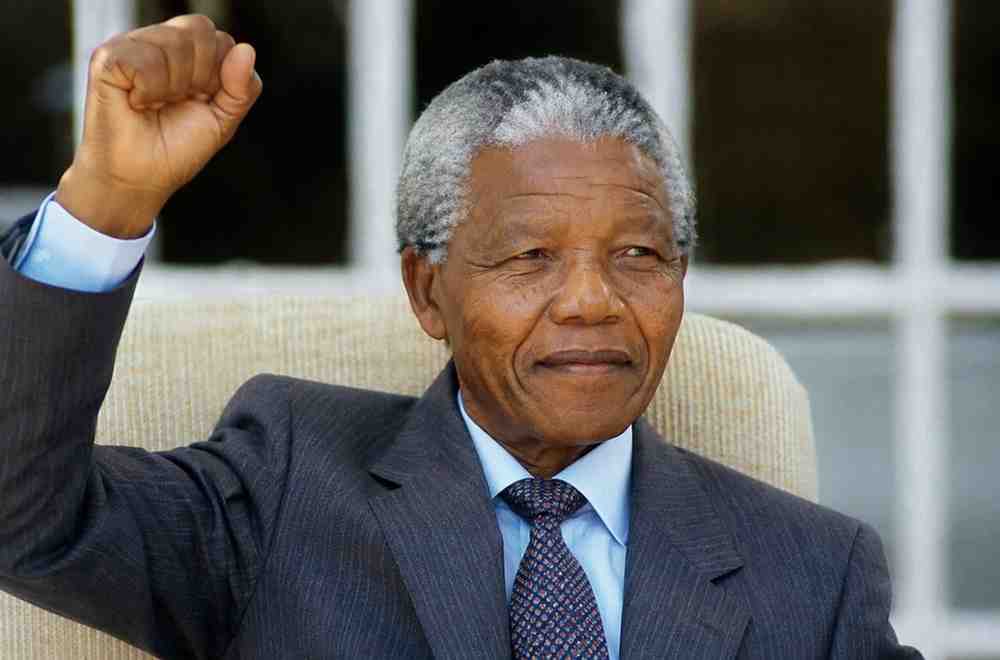
Nine days later, on February 11, 1990, the gates of Victor Verster Prison opened. Nelson Mandela — now 71 years old, his hair grey, his face deeply lined by 27 years of imprisonment — walked out into the sunlight, Winnie Mandela’s hand in his, his right fist raised.
Millions watched around the world. In townships across South Africa, people danced in the streets. In the United Nations and governments across every continent, leaders held their breath.
Mandela walked to a car, was driven to Cape Town, and delivered his first free speech in 27 years from the balcony of City Hall. His voice was strong. His message was clear. He called for continued pressure to end apartheid. He praised the ANC, the Communist Party, and all who had struggled. He called for peace.
He also said something that surprised many who expected bitterness: “I greet you all in the name of peace, democracy and freedom for all.” — All. Not Black South Africans. Not the liberation movement. All.
The word was chosen deliberately. The next chapter of Mandela’s life had already begun.
The lesson of this moment: Freedom, when it finally comes after a long captivity, can be squandered in bitterness or invested in possibility. The choice defines what comes next.
Moment 12: The Assassination of Chris Hani and the Speech That Saved South Africa (April 1993)
The transition from apartheid to democracy in South Africa was never smooth or certain. It was contested at every step by forces on both extremes — white right-wing groups who wanted to prevent Black majority rule, and Black radical factions who distrusted the negotiated process.
On April 10, 1993, the fragile peace was shattered. Chris Hani — the leader of the South African Communist Party, commander of MK, and one of the most beloved figures in the liberation movement — was assassinated outside his home by a Polish immigrant with ties to the white far right.
South Africa held its breath. The murder of Hani, a hero to millions of young Black South Africans, could easily have triggered mass violence and derailed the entire negotiated transition.
On the evening of April 10, it was Nelson Mandela — not President de Klerk, not any government official — who appeared on national television to speak to the nation. It was one of the most important speeches in South African history.
He called for calm. He honored Hani’s memory. He expressed the grief of the nation. And then he said something remarkable: he reminded South Africa that a white woman had called the police with the assassin’s license plate number — and that it was that act of civic courage by a white South African that had led to the killer’s arrest.
He was, in the most fraught moment of the transition, deliberately building a narrative of shared citizenship across racial lines. The violence did not come. The negotiations continued.
The lesson of this moment: A leader’s most important skill is sometimes knowing what to say — and what not to say — in the moment when a nation is deciding which way to turn.
Moment 13: Wearing the Springbok Jersey — The Miracle of Rugby (June 24, 1995)
South Africa hosted the Rugby World Cup in 1995 — the first major international sporting event held in post-apartheid South Africa. Rugby, historically, was the sport of white Afrikaners — a symbol of the old South Africa that had oppressed Black citizens for generations. For many Black South Africans, supporting the Springboks felt like cheering for the oppressor.
Mandela understood this. He also understood something else: that if the Springboks won the World Cup, and if that moment could be made to belong to all South Africans, it could do more for national unity than a year of political speeches.
He wore the green Springbok jersey — Number 6, the jersey of white Springbok captain Francois Pienaar — as he presented the trophy to the South African team after their victory in the final. When he walked onto the field in that jersey, the predominantly white crowd chanted: “Nelson! Nelson! Nelson!”
Pienaar, asked afterward what it had meant to have 62,000 South Africans supporting the Springboks, replied: “We did not have the support of 62,000 South Africans. We had the support of 43 million South Africans.”
Mandela’s jersey was not just clothing. It was a message, delivered without a single word: this country belongs to all of us now.
The lesson of this moment: Symbols, wielded with wisdom, can achieve what arguments alone never can.
Moment 14: The Truth and Reconciliation Commission — Choosing Healing Over Revenge (1996)
After becoming president, Mandela faced one of the most difficult questions any post-conflict leader confronts: what do you do with the perpetrators of past atrocities?
The conventional options were stark: prosecute, which risked destabilizing the fragile new democracy as powerful former apartheid officials and security forces fought back; or grant blanket amnesty, which meant betraying the victims and allowing perpetrators to escape accountability entirely.
Mandela and his government chose a third path: the Truth and Reconciliation Commission (TRC), chaired by Archbishop Desmond Tutu. The TRC’s model was radical in its design: perpetrators who made full public disclosure of their crimes could apply for amnesty. Victims could testify about what had been done to them. The nation would bear witness to its own history — in public, in full.
The TRC was deeply imperfect. Many perpetrators did not come forward. Many victims felt justice had been sacrificed for reconciliation. Some white South Africans dismissed it as a witch hunt. Some Black South Africans found the process too gentle with those who had tortured and murdered.
But it achieved something that few post-conflict societies have managed: a public, documented reckoning with the truth — a national act of confronting, rather than burying, a violent past. And it did so without triggering the spiral of retributive violence that has consumed so many other societies emerging from deep injustice.
The lesson of this moment: Justice and healing are not always the same thing. A leader wise enough to know the difference — and courageous enough to choose healing — serves their people most deeply.
Moment 15: Stepping Down — Choosing Democracy Over Power (June 1999)
In June 1999, after serving a single five-year term as South Africa’s first democratically elected president, Nelson Mandela did something that is, in the context of African political history and human nature, almost unthinkably rare: he voluntarily stepped down from power.
He was 80 years old. He was beloved. He could have remained in office indefinitely — his popularity was such that no political force in South Africa could have challenged him. The Constitution allowed a second term. Virtually every post-colonial African leader who had achieved power had clung to it.
Mandela chose otherwise. He had said from the beginning of his presidency that he would serve one term, and he kept that promise. He handed power peacefully to Thabo Mbeki, his elected successor, and returned to private life.
His reasoning was characteristically clear: South Africa needed to be a democracy, not a personality cult. If Mandela made himself indispensable — if the country’s stability depended on one man’s presence in office — then it was not truly free. True freedom meant institutions strong enough to survive the departure of any individual, however great.
In stepping down, Mandela gave South Africa something as important as anything he had achieved in power: the example of a peaceful democratic transition — proof that power could be held accountable, transferred willingly, and exercised in service of a people rather than a person.
He continued to work tirelessly in retirement — through the Nelson Mandela Foundation, through the Elders (a group of global leaders he helped found in 2007), and through advocacy on HIV/AIDS, global poverty, and education — until his health declined in his final years.
Nelson Mandela died on December 5, 2013, at the age of 95. Tributes poured in from every corner of the world. Leaders who had spent careers in opposition to each other stood side by side to honor him. Ordinary people gathered outside his home in Johannesburg and sang through the night.
The lesson of this moment: The final measure of a great leader is not how tightly they hold power — but how gracefully, and how willingly, they give it back.
What Mandela’s Life Teaches Us
Across these 15 moments, a portrait emerges — not of a saint or a superhero, but of a profoundly human being who made choices, suffered consequences, grew, changed, and endured.
Several threads run through his entire life:
Forgiveness as strategy, not weakness. Mandela’s forgiveness of his jailers and his opponents was not naive — it was deliberate and calculated. He understood that a society built on revenge would consume itself. Forgiveness was the instrument of survival.
Patience as power. Twenty-seven years in prison did not break Mandela because he understood something most people never grasp: that time, correctly used, is not wasted. He studied, thought, prepared, and waited — and when his moment came, he was ready.
The personal cost of great purpose. Mandela’s greatness came at an enormous personal price — decades away from his children, two failed marriages, the deaths of loved ones he could not mourn in person. History tends to airbrush this pain. His own letters make it unmistakably clear.
Identity rooted in values, not circumstances. Whether he was a rural shepherd boy, a revolutionary, a prisoner, or a president, Mandela remained recognizably himself — guided by a consistent set of values that neither power nor imprisonment could bend.
Conclusion: The Continuing Lesson of Nelson Mandela
Nelson Mandela’s life is not just a story about South Africa. It is not just a story about apartheid, or the Cold War, or post-colonial Africa. It is a story about what a human being is capable of — about the outer limits of endurance, forgiveness, leadership, and love.
He demonstrated, in 95 years of living, that it is possible to fight injustice without becoming unjust. That it is possible to hate a system without hating the people within it. That freedom is worth fighting for across a lifetime, not just in a single dramatic moment. And that the most powerful thing a leader can ultimately do is make themselves unnecessary — to build something that does not require them.
In a world that still produces injustice, oppression, and the temptation of revenge, Nelson Mandela’s life remains not just a historical record but a living instruction: this is how a human being can choose to be.
The world is still learning.