
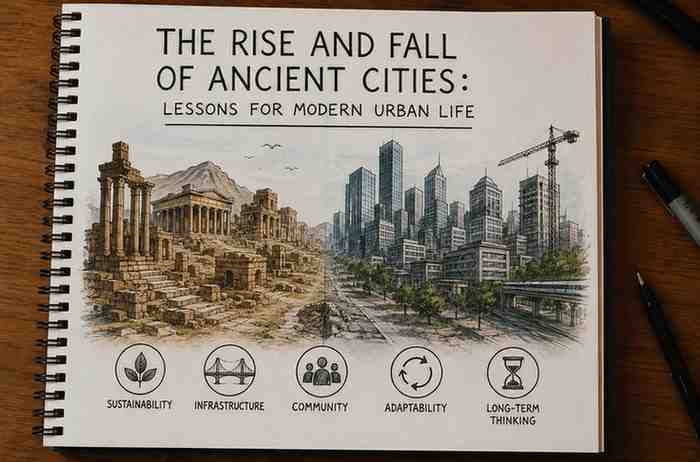
introduction
Cities are among humanity’s greatest achievements. They have served as centers of change, culture, innovation, and political power throughout history. The rise and fall of cities has shaped civilizations, influenced trade routes, and transformed societies across the world. For centuries, some cities became symbols of prosperity and influence, attracting people from far and wide. Yet many of these once-thriving urban centers eventually declined, were abandoned, or disappeared altogether.
The stories behind the rise and fall of ancient cities are more than fascinating historical accounts. They provide valuable insights into the challenges that modern cities face today. Issues such as population growth, environmental pressure, infrastructure management, economic inequality, and political instability are not new. Ancient civilizations struggled with many of the same problems, often with dramatic consequences.
By exploring the rise and fall of ancient cities, we can better understand what makes urban centers successful and what causes them to fail. More importantly, these lessons can help modern societies build sustainable, resilient, and livable cities for future generations.
Why historic towns Emerged
The development of historic Ancient Cities changed into intently connected to agriculture, trade, and governance. As communities found out to produce meals surpluses, humans now not had to spend all their time farming. This allowed societies to concentrate on crafts, management, religion, and trade.
numerous factors contributed to the boom of ancient towns:
- get right of entry to to water sources
- Fertile agricultural land
- Strategic exchange routes
- robust political management
- protective blessings
- religious or cultural significance
these elements created conditions that endorsed population increase and economic improvement.
The importance of area
place regularly determined whether or not a metropolis would thrive. towns situated near rivers, coastlines, or fundamental alternate routes gained widespread benefits.
for instance, the historical metropolis of Babylon flourished due to its position along the Euphrates River. further, Alexandria have become a first-rate middle of getting to know and trade due to its Mediterranean area.
get right of entry to to transportation and assets enabled those towns to hook up with distant regions and gather wealth.
The Golden Age of historical urban facilities
As Ancient Cities improved, they became engines of innovation and cultural development. ancient city facilities often executed great improvements in architecture, engineering, governance, and education.
Infrastructure and Engineering
Many ancient cities evolved state-of-the-art infrastructure systems that supported huge populations.
Examples encompass:
- Aqueducts for water distribution
- street networks for transportation
- Drainage and sewage structures
- Public markets and amassing areas
- protecting partitions and fortifications
The town of Rome became famous for its roads, aqueducts, and public buildings. those improvements advanced day by day life and helped maintain social order.
financial Prosperity
alternate played a vital position in urban success. traders transported goods which includes spices, metals, textiles, and agricultural merchandise across good sized distances.
towns have become monetary hubs wherein humans should:
- purchase and promote items
- exchange ideas
- increase new technology
- build business networks
financial variety often made towns more resilient and attractive to migrants searching for opportunities.
Cultural and highbrow boom
historic Ancient Cities have been not merely industrial facilities. They had been also locations in which thoughts flourished.
Libraries, temples, faculties, and public boards recommended mastering and creativity. Many medical discoveries, philosophical actions, and creative traditions emerged inside Ancient Cities environments.
The awareness of talent and resources allowed civilizations to achieve wonderful cultural accomplishments.
Why historical cities Declined
in spite of their successes, many historic Ancient Cities subsequently collapsed. The reasons various, but numerous routine patterns seem at some stage in records.
understanding these styles allows monitor the vulnerabilities that continue to affect contemporary city areas.
Environmental demanding situations
one of the maximum not unusual causes of urban decline become environmental pressure.
Water Shortages
towns rely on reliable water resources. when rivers modified path, droughts came about, or water systems failed, city populations struggled to survive.
some ancient settlements increased beyond the limits of to be had assets. As populations grew, water call for accelerated, placing massive strain on neighborhood ecosystems.
with out ok planning, shortages led to financial trouble and social unrest.
Soil Degradation
Agricultural productivity supported city growth. however, intensive farming on occasion damaged the land.
issues covered:
- Soil erosion
- Deforestation
- Overgrazing
- Declining crop yields
As meals production weakened, towns located it increasingly hard to sustain huge populations.
weather trade in ancient instances
weather shifts have stimulated human societies during records. prolonged droughts, floods, and changing climate styles disrupted agriculture and trade networks.
whilst environmental situations deteriorated, some cities may want to now not support their population.
Political Instability and conflict
robust management frequently contributed to a metropolis’s rise, but political troubles often increased decline.
internal Corruption
As cities have become wealthier, political systems every so often grew inefficient or corrupt.
commonplace issues included:
- awareness of electricity
- terrible governance
- economic mismanagement
- Social inequality
when residents lost trust in leadership, balance weakened.
Wars and Invasions
Many historical cities confronted outside threats from rival states and invading armies.
Repeated conflicts broken infrastructure, disrupted exchange, and depleted assets. Even effective city centers may want to warfare to recover after extended struggle.
the fall of numerous towns during records demonstrates how military strain can undermine long-time period prosperity.
financial Decline and trade Disruptions
financial health is essential for urban survival.
Dependence on change
Many historical towns relied closely on exchange networks. while alternate generated wealth, it additionally created vulnerabilities.
If change routes shifted due to political adjustments, natural failures, or rising competition, cities ought to lose their financial significance.
A thriving industrial middle may want to quickly emerge as isolated and impoverished.
Wealth Inequality
monetary growth does now not always gain every person equally.
In a few historic societies, wealth became focused among small elite corporations whilst regular citizens faced increasing hardships.
This imbalance often led to:
- Social tensions
- Political unrest
- decreased economic mobility
- vulnerable community brotherly love
current towns keep to stand comparable challenges.
The Case of historic urban disasters
several well-known historical cities illustrate how more than one factors often combined to reason decline.
The thriller of the Indus Valley towns
The city centers of the historical Indus Valley civilization displayed superior planning, prepared streets, and complex drainage systems.
however, environmental changes, transferring river systems, and financial disruptions possibly contributed to their decline. Their story highlights the significance of adapting to converting environmental conditions.
The Decline of Petra
Petra become once a thriving exchange middle connecting essential business routes.
through the years, adjustments in local exchange patterns decreased its monetary significance. Earthquakes and political modifications similarly weakened the town.
Petra demonstrates how financial dependence on a selected position can emerge as a protracted-time period vulnerability.
The collapse of Maya city facilities
numerous fundamental Maya towns experienced dramatic declines.
Researchers factor to a aggregate of factors:
- Environmental degradation
- populace stress
- Drought
- Political struggle
Their revel in illustrates how interconnected demanding situations can crush even relatively state-of-the-art societies.
training for cutting-edge urban life
historic cities may additionally belong to the past, however the classes they provide are remarkably applicable nowadays.
construct Sustainable aid systems
cutting-edge cities devour giant amounts of water, strength, and food. Sustainable control of these sources is crucial for lengthy-term success.
urban planners must focus on:
- Water conservation
- Renewable electricity
- inexperienced infrastructure
- efficient transportation systems
towns that forget about useful resource limitations may face serious challenges within the future.
invest in Resilient Infrastructure
ancient cities regularly declined while infrastructure may want to now not meet developing needs.
present day urban areas need to invest in:
- dependable transportation networks
- Flood safety systems
- clean water facilities
- modern communique structures
Resilient infrastructure enables towns adapt to surprising crises.
put together for climate alternate
weather-related dangers keep to increase worldwide.
current towns face threats which include:
- rising sea stages
- heat waves
- severe storms
- Water scarcity
gaining knowledge of from historical examples can encourage proactive making plans instead of reactive responses.
encourage monetary diversity
towns that rely closely on a single industry or financial interest can turn out to be at risk of sudden modifications.
A various economy affords greater stability through creating a couple of resources of employment and investment.
Examples consist of balancing:
- generation
- production
- Tourism
- training
- Healthcare
- monetary services
financial flexibility facilitates towns resist external shocks.
promote Social Inclusion
records shows that deep social divisions can weaken city societies.
a success cities create possibilities for all residents by using supporting:
- inexpensive housing
- first-class education
- Public healthcare
- identical financial possibilities
- network engagement
strong social brotherly love improves resilience and long-time period stability.
clever cities and historic information
cutting-edge generation offers effective gear for addressing urban challenges. clever town projects use information and digital structures to enhance performance and sustainability.
Examples consist of:
- smart site visitors management
- electricity-green homes
- real-time public transportation updates
- Water monitoring systems
- Waste discount technology
however, technology alone is not enough.
ancient cities remind us that a success urban improvement depends on balancing innovation with environmental responsibility, powerful governance, and community well-being.
The most superior generation cannot atone for terrible making plans or unsustainable useful resource use.
The future of urban residing
nowadays, extra people stay in cities than at every other factor in human history. urban populations continue to grow unexpectedly, specially in growing areas.
future towns will want to cope with complex demanding situations, along with:
- populace expansion
- climate edition
- Housing affordability
- resource management
- Infrastructure modernization
historic enjoy gives a treasured manual.
towns that prioritize sustainability, adaptability, and inclusiveness are more likely to thrive over the long term.
The rise and fall of historic urban centers demonstrates that prosperity is never assured. It ought to be continuously maintained through considerate making plans and accountable management.
end
The records of historical towns is a story of ambition, innovation, success, and from time to time failure. superb urban centers emerged because they efficaciously managed sources, encouraged trade, constructed robust institutions, and fostered cultural growth. but many sooner or later declined whilst environmental pressures, political instability, monetary disruptions, or social inequalities became too intense.
these historical reviews stay exceptionally applicable in the current world. brand new cities face the various identical demanding situations, even though on a bigger and more complicated scale. by way of analyzing the successes and failures of historical city civilizations, modern-day planners, policymakers, and citizens can make higher decisions about sustainability, resilience, and increase.
The remaining lesson is straightforward: towns thrive once they adapt to exchange and control sources wisely. those who fail to do so hazard repeating the errors of the beyond. know-how the rise and fall of ancient cities is not merely an exploration of history—it is a roadmap for constructing more potent and more sustainable communities for the destiny.
FAQ
1. Why did many historical cities crumble?
historical towns frequently declined due to environmental problems, water shortages, political instability, struggle, economic disruptions, and social inequality. usually, numerous elements labored collectively in preference to a unmarried reason.
2. what is the largest lesson modern-day cities can examine from historical cities?
The maximum important lesson is the want for sustainable aid management. cities ought to stability boom with environmental safety and long-term making plans.
3. How did alternate contribute to the success of ancient cities?
change added wealth, sources, new ideas, and cultural alternate. towns placed alongside most important trade routes frequently became effective economic facilities.
four. Are weather changes liable for the decline of ancient civilizations?
in lots of cases, weather shifts consisting of prolonged droughts and converting rainfall styles played a tremendous function in weakening city societies and reducing agricultural productiveness.
five. Why is analyzing historical towns vital nowadays?
historical cities offer precious insights into urban planning, sustainability, governance, and resilience. Their studies can assist contemporary cities avoid similar mistakes and put together for destiny challenges.