
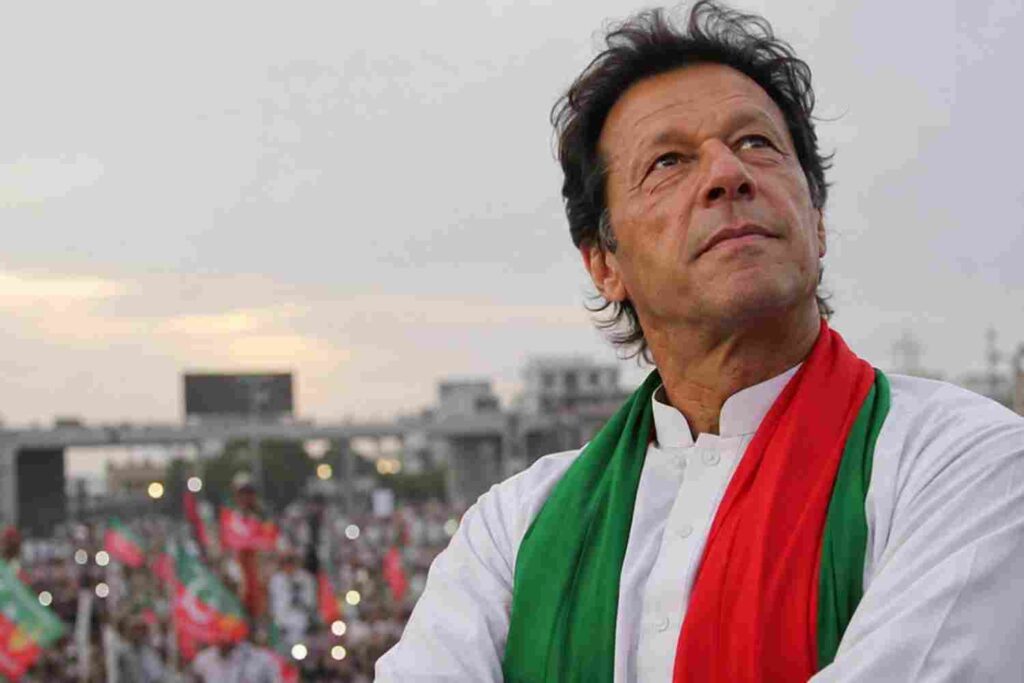
In the span of a single extraordinary life, he has been a village boy who became a global celebrity, a cricket captain who achieved the impossible, a philanthropist who built a cancer hospital with nothing but his own fame and determination, a political outsider who spent 22 years being dismissed before winning the prime ministership of a nation, and finally — most dramatically of all — a prisoner whose supporters fill the streets of Pakistan in the millions demanding his release.
<cite index=”21-1″>Imran Khan is an antiestablishment politician in Pakistan who in 2022 became the first prime minister to be removed by a parliamentary vote. He rose to fame as a cricket player who led Pakistan’s national team to a Cricket World Cup victory.</cite>
That one sentence captures the outline. But the outline does not capture the man — the charisma, the contradictions, the genuine achievements and genuine controversies, the extraordinary loyalty of his supporters and the fierce opposition of his critics, and the question that Pakistan’s political future may hinge on: what happens to Imran Khan next?
This is the complete story — from Lahore in 1952 to a prison cell in 2026 — told with the depth and honesty that one of the most significant figures in Pakistan’s history deserves.
Part One: The Early Years — From Lahore to Oxford
Born Into Cricket
<cite index=”22-1″>Imran Ahmed Khan Niazi was born on October 5, 1952, in Lahore, Pakistan.</cite> He came from a distinguished Pashtun family — educated, respected, and with cricket running through its veins.
<cite index=”21-1″>There were several accomplished cricket players in his family, including two elder cousins, Javed Burki and Majid Khan, who both served as captains of the Pakistani national team.</cite> Growing up around cricketers of that calibre, the game was never just a sport for young Imran — it was the family language.
He received his early education at Aitchison College in Lahore — one of Pakistan’s most prestigious institutions — before heading to England. <cite index=”21-1″>Imran Khan played cricket in Pakistan and the United Kingdom in his teens and continued playing while studying philosophy, politics, and economics at the University of Oxford.</cite> At Keble College, Oxford, he studied PPE — the same degree that has produced British prime ministers, diplomats, and public intellectuals — while simultaneously developing the cricket talent that would make him one of the greatest all-rounders in the history of the game.
The Early Cricket Career
<cite index=”21-1″>Khan played his first match for Pakistan’s national team in 1971, but he did not take a permanent place on the team until after his graduation from Oxford in 1976.</cite>
<cite index=”29-1″>Khan debuted for Pakistan in 1971 at age 18 and played 88 Tests and 175 ODIs until 1992, renowned as an all-rounder with 3,807 Test runs and 362 wickets.</cite>
These numbers place him among the greatest cricketers of any era. The combination of batting and bowling — both at international quality — is extraordinarily rare. Cricket analysts consistently rank him among the top three all-rounders in the history of the game, alongside Sir Garfield Sobers and Sir Richard Hadlee.
<cite index=”21-1″>By the early 1980s Khan had distinguished himself as an exceptional bowler and all-rounder, and he was named captain of the Pakistani team in 1982.</cite>
<cite index=”21-1″>Khan’s athletic talent and good looks made him a celebrity in Pakistan and England, and his regular appearances at fashionable London nightclubs provided fodder for the British tabloid press.</cite> He was, in the 1980s, as close to a global celebrity as Pakistani sport had ever produced — photographed with princesses, profiled in international magazines, and adored by cricket fans across the subcontinent and beyond.
Part Two: The 1992 World Cup — Pakistan’s Greatest Moment
The “Cornered Tigers”
The story of the 1992 Cricket World Cup is one of the great comeback narratives in sporting history — and at its centre, the decisive force, was Imran Khan.
Pakistan entered the tournament in deeply unpromising circumstances. The team’s performances were inconsistent. Several key players were injured. The campaign stumbled. There were genuine questions about whether the team could even qualify for the next round.
At the lowest point, Imran Khan delivered what became known as the “Cornered Tigers” speech to his team. <cite index=”29-1″>His “cornered tigers” speech inspired the 1992 squad, cementing his legacy as Pakistan’s greatest cricketer.</cite> The metaphor was perfect: a tiger cornered has nothing left to lose and fights with everything it has. That is what Pakistan did.
<cite index=”25-1″>He left cricket at the pinnacle of his sports career — after he captained the Pakistani team to its first and only ODI World Cup victory in 1992, with a record of 3,807 runs and 362 wickets in Test cricket.</cite>
<cite index=”27-1″>His leadership and sheer willpower reached their peak when he captained Pakistan to its first-ever Cricket World Cup victory in 1992. That moment — Imran lifting the trophy in Melbourne — became an iconic image in Pakistani history.</cite>
The trophy was lifted in the name of something more than cricket. Imran Khan had been fundraising for a cancer hospital throughout the tournament — and he dedicated the World Cup victory to the memory of his mother and to the hospital he was building in her name. The intersection of sporting triumph and humanitarian commitment in that single moment revealed the full complexity of who this man was.
<cite index=”29-1″>Khan was inducted into the ICC Cricket Hall of Fame in 2009.</cite>
Part Three: The Philanthropist — Building What Politicians Wouldn’t
Shaukat Khanum Memorial Cancer Hospital
Between his retirement from cricket and his serious entry into politics, Imran Khan did something that most former sportsmen do not: he turned fame into genuine social infrastructure.
<cite index=”29-1″>Post-retirement in 1992, Khan channeled his fame into philanthropy, founding the Shaukat Khanum Memorial Cancer Hospital in Lahore in 1994 in memory of his mother, who died of cancer in 1985. It provides free treatment to underprivileged patients.</cite>
The achievement of building this hospital deserves to be stated clearly: Imran Khan had no government funding, no institutional backing, and no corporate sponsor. He raised the money himself — through his international cricket fame, through door-to-door fundraising across Pakistan, through overseas Pakistani communities in the United Kingdom and North America, and through a personal commitment that consumed years of his life.
The Shaukat Khanum Memorial Cancer Hospital has since become one of Pakistan’s most trusted institutions — providing cancer treatment to patients regardless of their ability to pay, funded by ongoing donations. Approximately 75% of its patients receive subsidized or free care.
Namal University and Educational Vision
<cite index=”29-1″>He also established the Imran Khan Foundation (IKF) in 2006 and Namal University in Mianwali in 2008 to promote education in rural areas.</cite>
Namal University — established in an underserved rural area of Punjab — represents Imran Khan’s vision of bringing quality higher education to communities that have historically been denied access to it. The university has affiliations with the University of Bradford in the United Kingdom and provides internationally recognized degrees to students from across Pakistan.
These philanthropic achievements — predating and entirely independent of his political career — constitute a legacy that would stand on their own terms even without everything that followed. They are the evidence that, whatever one thinks of Imran Khan the politician, Imran Khan the philanthropist delivered genuine, lasting benefit to hundreds of thousands of Pakistanis.
Part Four: The Political Journey — 22 Years to the Top
Founding PTI — The Long Road Begins (1996)
<cite index=”20-1″>In 1996, Khan founded Pakistan Tehreek-e-Insaf (PTI) — Movement for Justice.</cite>
The founding premise of PTI was simple but radical in the Pakistani political context: that Pakistan needed a clean break from the two dynasties — the Pakistan Muslim League (Nawaz) and the Pakistan Peoples Party — that had dominated the country’s democratic politics for decades. Imran Khan offered himself as the alternative: a man of demonstrated integrity (in his philanthropic work), international standing, and anti-corruption credentials.
The first electoral results were humbling. <cite index=”22-1″>He contested his first elections from nine different constituencies in the 1997 general elections, but was unsuccessful from all of them.</cite> PTI won a single seat in the 2002 elections. The dismissals — from the established political class, from commentators, from international observers — were consistent and sometimes contemptuous. Imran Khan was characterized as a naive, single-issue populist with celebrity capital but no political substance.
He kept going.
The Gathering Momentum (2011–2013)
The turning point came on October 30, 2011 — when Imran Khan addressed a gathering in Lahore’s Minar-e-Pakistan ground that was so large it changed how Pakistan’s political establishment viewed him. Hundreds of thousands of people — an overwhelming proportion of them young, educated, and previously politically disengaged — came to hear him speak.
The political landscape had shifted. A generation that had grown up watching Pakistan’s political system fail them — the corruption, the incompetence, the dynastic politics, the subservience to military pressure — saw in Imran Khan something they had not seen before: a politician who had proven, in his non-political life, that he could actually deliver.
<cite index=”27-1″>In the general elections of 2013, PTI gained significant ground, forming a government in Khyber Pakhtunkhwa, which became a testing ground for his policies.</cite>
The KPK government was significant beyond its scale. It gave PTI a laboratory — a real government with real responsibilities — in which to demonstrate whether their anti-corruption, pro-accountability rhetoric could translate into actual governance. The record was mixed, as all provincial governance records are, but it was sufficient to maintain and grow the popular belief that Imran Khan’s movement was different from what had come before.
The 2018 Victory — “Naya Pakistan”
<cite index=”27-1″>In the general elections of 2018, Imran Khan finally achieved what once seemed impossible — his party won a majority and he became the 22nd Prime Minister of Pakistan. In his victory speech, he spoke of turning Pakistan into a welfare state, inspired by the principles of the early Islamic state of Medina.</cite>
It had taken 22 years. The man who had been dismissed, mocked, and written off, who had contested nine seats in 1997 and won none, now stood as the elected leader of a nation of 220 million people.
The victory speech set ambitious themes: anti-corruption, welfare for the poor, meritocracy over patronage, environmental protection, economic reform. He spoke of Riyasat-e-Medina — the idea of a state built on the principles of justice, welfare, and accountability that characterized the early Islamic polity. To his supporters, it was a vision of what Pakistan could be. To his critics, it was utopian rhetoric disconnected from political reality.
Part Five: The Prime Ministership — Promise, Challenge, and Removal
Achievements in Office (2018–2022)
Imran Khan served as Pakistan’s Prime Minister for three years and eight months. The record of his government was, like all governments, a complex mixture of achievement and failure.
The Ehsaas Program — a comprehensive social protection initiative — became one of his government’s most significant domestic achievements. <cite index=”28-1″>He introduced Ehsaas Program for poverty reduction and Sehat Sahulat Card for free healthcare services.</cite> The Ehsaas Program consolidated dozens of scattered social protection schemes into a more coherent system reaching millions of Pakistan’s poorest citizens. The Sehat Sahulat Card provided health insurance coverage to families who previously had no protection against catastrophic medical expenses.
The Billion Tree Tsunami — <cite index=”28-1″>he focused on environmental protection through initiatives like the Billion Tree Tsunami project, which helped in large-scale tree plantation across Pakistan.</cite> This initiative, which had begun during his government’s tenure in KPK, was scaled up nationally and received international recognition. The United Nations Environment Programme highlighted it as a model for other developing countries.
COVID-19 Response — Pakistan’s management of the COVID-19 pandemic under Imran Khan’s government was, by most international assessments, one of the more effective responses in the developing world. The decision to avoid a full lockdown — controversial at the time — reflected a genuine calculation about Pakistan’s economic vulnerabilities and the impossibility of enforcing lockdowns on populations that could not afford to stop working.
Foreign Policy — Imran Khan pursued a more independent foreign policy than his predecessors, emphasizing Pakistan’s sovereignty in its relationship with the United States, engaging with China under CPEC, and maintaining dialogue with regional neighbors. His public statements critical of certain U.S. foreign policy positions made him popular domestically but complicated relationships with Washington.
The Economic Challenges
Pakistan’s economic difficulties during Imran Khan’s tenure were severe — though the degree to which they were his government’s responsibility versus inherited structural problems remains genuinely debated.
The government faced a chronic balance of payments crisis, high inflation, rising fuel and commodity prices (exacerbated by global supply chain disruptions and later the Russia-Ukraine war’s impact on commodity prices), and the heavy debt burden of the China-Pakistan Economic Corridor (CPEC) agreements signed by previous governments.
The IMF program negotiations — necessary to stabilize Pakistan’s external accounts — required painful adjustments including fuel subsidy removal that drove up inflation and eroded the government’s popular support. Critics argued that the economic management was incompetent; supporters argued that the government inherited a structural crisis and managed it as well as anyone could in the circumstances.
The No-Confidence Vote and Removal (April 2022)
<cite index=”21-1″>Imran Khan in 2022 became the first prime minister to be removed by a parliamentary vote.</cite>
The no-confidence vote — which succeeded on April 10, 2022 — was the culmination of months of opposition coordination across the very parties that had previously been his critics: PML-N, PPP, and a significant number of PTI’s own coalition partners who switched sides.
Imran Khan’s explanation for his removal was unambiguous: he claimed that a foreign conspiracy — primarily involving the United States — was behind the vote, presented a diplomatic cable as evidence, and argued that his independent foreign policy had made him a target for regime change engineered by foreign powers.
His critics — including the military establishment and the coalition government that replaced him — dismissed these claims as a conspiracy theory designed to deflect from political and economic failure.
The dispute about what happened in April 2022 — and who was responsible for it — remains unresolved and is at the heart of Pakistan’s continuing political crisis.
Part Six: Post-Removal — Resistance, Arrest, and Imprisonment
The Movement That Would Not End
What the architects of Imran Khan’s removal did not anticipate was the ferocity and scale of the popular backlash. Far from disappearing from political life after his removal — as previous ousted prime ministers had tended to — Imran Khan became more powerful outside government than he had been inside it.
He launched a series of massive public rallies — the largest in Pakistani political history — demanding early elections and condemning what he characterized as a conspiracy against him and against Pakistan’s democratic process. The energy was extraordinary: millions of people attending in person, tens of millions following online, a movement with a genuinely revolutionary character that was unlike anything Pakistani politics had seen.
The May 2023 Arrest and Nationwide Protests
On May 9, 2023, Imran Khan was arrested from the premises of the Islamabad High Court — a dramatic, widely photographed moment that triggered immediate and widespread protests across Pakistan.
The protests of May 9, 2023 became significant in themselves — some of them involving attacks on military installations, including the Corps Commander’s residence in Lahore and the General Headquarters in Rawalpindi. These incidents became the basis for a major wave of legal cases against Imran Khan and PTI workers under anti-terrorism laws.
Imran Khan and his supporters maintained that PTI did not organize these attacks and that provocateurs were responsible. The government and military argued that the attacks were orchestrated by PTI leadership.
The legal consequences were enormous. <cite index=”29-1″>Despite imprisonment and 186 cases, his influence persists, with PTI dominating 2024 polls.</cite>
The 2024 Elections — Winning From Prison
One of the most extraordinary chapters of the Imran Khan story is what happened in the February 2024 general elections — which he contested while imprisoned, with PTI barred from using its electoral symbol.
<cite index=”15-1″>Pakistan’s election results showed jailed cricket star and former PM Imran Khan’s backers defying the odds to win seats, even as he sat in a prison cell.</cite>
PTI-backed independent candidates won the largest share of seats of any single political grouping — an astonishing achievement that demonstrated the depth and durability of Imran Khan’s popular support. The party’s exclusion from power in the resulting coalition government — which brought together PML-N and PPP, backed by the military establishment — was widely seen as a political management exercise rather than a reflection of the election outcome.
Sentences and Legal Battles (2024–2026)
The legal cases against Imran Khan have multiplied and intensified since his imprisonment.
<cite index=”13-1″>A Pakistani court on December 20, 2025 sentenced former Prime Minister Imran Khan and his wife Bushra Bibi to 17 years in prison each in a corruption case involving the under-priced purchase of luxury state gifts. The latest conviction adds to a series of legal troubles for Khan, who has been behind bars since August 2023, and is currently serving a 14-year sentence in a separate land graft case.</cite>
<cite index=”13-1″>He faces dozens of cases filed since he was ousted from office in 2022, ranging from corruption to anti-terrorism and state secrets charges. Khan has denied wrongdoing in all the cases, which his party says are politically motivated.</cite>
<cite index=”14-1″>Khan’s lawyers have petitioned a federal high court to suspend his 17-year prison term in a graft case, arguing that his worsening health warrants immediate relief.</cite>
<cite index=”18-1″>The Supreme Court of Pakistan approved bail pleas of Imran Khan in eight cases linked to the May 9, 2023 violence.</cite> However, the bail approvals in some cases did not result in his release, as he continues to serve sentences in other convictions.
Three Years Behind Bars — August 2026
<cite index=”12-1″>As former Pakistani Prime Minister Imran Khan marks three years in jail, his family, political party, and a prominent international rights group have condemned his solitary detention and demanded a restoration of his constitutional rights.</cite>
<cite index=”12-1″>Thousands of members and supporters of Khan’s Pakistan Tehreek-e-Insaf party held demonstrations across the country to call for his immediate release. Khan is currently serving a 14-year sentence for corruption while his wife was given seven years in the same case. In December, the couple was sentenced to an additional 17 years in prison in a case involving state gifts.</cite>
<cite index=”12-1″>PTI posted on X: “Three years. Thousands of days behind prison walls. Endless attempts to break his spirit. Yet they have failed. The struggle for democracy, constitutional rule, and the people’s right to choose their future does not end with arbitrary detentions.”</cite>
Amnesty International and other human rights organizations have raised concerns about the conditions and process of Imran Khan’s imprisonment, citing solitary confinement and restrictions on family visits and legal access.
Part Seven: The Legacy — What Imran Khan Has Built and What Remains Contested
What His Supporters See
To the tens of millions of Pakistanis who support Imran Khan — and who continued to vote for him and protest for him even after three years of his imprisonment — he represents something that goes beyond conventional political loyalty.
<cite index=”29-1″>Imran Khan’s legacy endures as a transformative force, mobilizing Pakistan’s youth against corruption and inspiring global admiration for his cricket and humanitarian feats.</cite>
He awakened a generation of previously apolitical young Pakistanis to democratic participation — the university students, the urban professionals, the overseas Pakistanis who had given up on the country’s political system and found in Imran Khan a reason to engage. Whatever ultimately happens to him politically, that political activation is real and durable.
He established, through Shaukat Khanum and Namal University, genuine institutions that continue to deliver tangible benefit to hundreds of thousands of Pakistanis entirely independent of his political fate.
He raised questions about corruption, accountability, and institutional responsibility that, whatever one thinks of his answers, were the right questions to raise and have permanently elevated anti-corruption discourse in Pakistani politics.
What His Critics Argue
His critics make a different case — and some of it is substantive.
The economic management of his government left Pakistan in a severely deteriorated fiscal position. Inflation during his tenure eroded the purchasing power of ordinary Pakistanis. The political confrontations of his post-removal period — including the events of May 9, 2023 — resulted in violence that caused real damage and deep divisions.
His foreign policy rhetoric — particularly regarding the United States — complicated Pakistan’s international relationships. His governance style, characterized by critics as confrontational and unwilling to build necessary political coalitions, made effective policymaking more difficult.
And the conspiracy theories he advanced — regarding a foreign plot to remove him — are either genuine evidence of external interference in Pakistani democracy (as his supporters believe) or a self-serving narrative that deflected responsibility for political failures (as his critics argue). This dispute cannot currently be resolved with public information.
The Unresolved Question
The most important question about Imran Khan’s legacy cannot yet be answered, because the story is not finished.
He is 73 years old. He is in prison. He has been convicted in multiple cases. His party — despite winning the most seats in the 2024 election — is excluded from federal power.
And yet: <cite index=”29-1″>as of October 2025, Khan’s calls for electoral audits and military neutrality continue to shape Pakistan’s volatile politics.</cite> His supporters fill streets. His name trends globally. International human rights organizations scrutinize his treatment. The question of what Pakistan’s political future looks like — with or without Imran Khan’s freedom — is genuinely unresolved.
History will make its judgment. But history requires time that we do not yet have.
Timeline: Key Moments in Imran Khan’s Life
| Year | Event |
|---|---|
| 1952 | Born October 5, Lahore, Pakistan |
| 1971 | Test cricket debut for Pakistan |
| 1976 | Graduates from Oxford University |
| 1982 | Named captain of Pakistan cricket team |
| 1983 | Named Wisden Cricketer of the Year |
| 1992 | Leads Pakistan to first-ever Cricket World Cup victory; retires from cricket |
| 1994 | Founds Shaukat Khanum Memorial Cancer Hospital, Lahore |
| 1996 | Founds Pakistan Tehreek-e-Insaf (PTI) |
| 2002 | PTI wins single seat in general elections |
| 2008 | Founds Namal University, Mianwali |
| 2009 | Inducted into ICC Cricket Hall of Fame |
| 2011 | Historic Minar-e-Pakistan rally — political turning point |
| 2013 | PTI forms government in Khyber Pakhtunkhwa |
| 2018 | Wins general elections; becomes 22nd Prime Minister of Pakistan |
| 2022 | Removed by no-confidence vote (April) — first PM in Pakistan’s history to be removed this way |
| 2023 | Arrested May 9; nationwide PTI protests; imprisoned August 5 |
| 2024 | PTI-backed candidates win largest vote share in February elections |
| 2025 | Sentenced to additional 17 years in state gifts case (December) |
| 2026 | Three years in prison (August 5); PTI protests demand release |
Imran Khan at a Glance
| Category | Detail |
|---|---|
| Full Name | Imran Ahmed Khan Niazi |
| Date of Birth | October 5, 1952 |
| Birthplace | Lahore, Pakistan |
| Education | Aitchison College, Lahore; Keble College, Oxford (PPE) |
| Cricket Career | 1971–1992 |
| Test Record | 88 Tests, 3,807 runs, 362 wickets |
| Greatest Achievement | 1992 Cricket World Cup (Captain) |
| Political Party | Pakistan Tehreek-e-Insaf (PTI), founded 1996 |
| Prime Ministership | August 18, 2018 – April 10, 2022 |
| Philanthropy | Shaukat Khanum Hospital (1994), Namal University (2008) |
| Current Status | Imprisoned (August 2023–present) |
| Current Sentences | 14-year (Al-Qadir Trust), 17-year (state gifts case) |
Conclusion: A Story Still Being Written
Imran Khan’s life defies the neat narrative arc that biography usually requires. It is not a story of triumph or tragedy — it is both simultaneously, and it is not over.
He is the cricketer who won the impossible, the philanthropist who built what politicians would not, the politician who waited 22 years for a chance that everyone said would never come, the prime minister who was removed before he could fully deliver on his vision, and the prisoner whose supporters believe he is being persecuted for the same independence that made him extraordinary.
<cite index=”26-1″>Whether celebrated or criticized, one thing is certain: his influence on Pakistan’s history is undeniable. His legacy will continue to shape the country’s future, and his initiatives will have a lasting impact on the lives of millions.</cite>
The final chapter of this story has not been written. It will be written in courtrooms and on streets, in election results and in political negotiations, perhaps in a prison cell and perhaps beyond it.
What is already certain, regardless of how that final chapter reads, is that Imran Khan has lived one of the most remarkable lives in the history of this remarkable, troubled, extraordinary nation. And that Pakistan — whatever its future holds — will never fully understand itself without understanding him.